
 SEARCH
 LIST YOUR PROPERTY
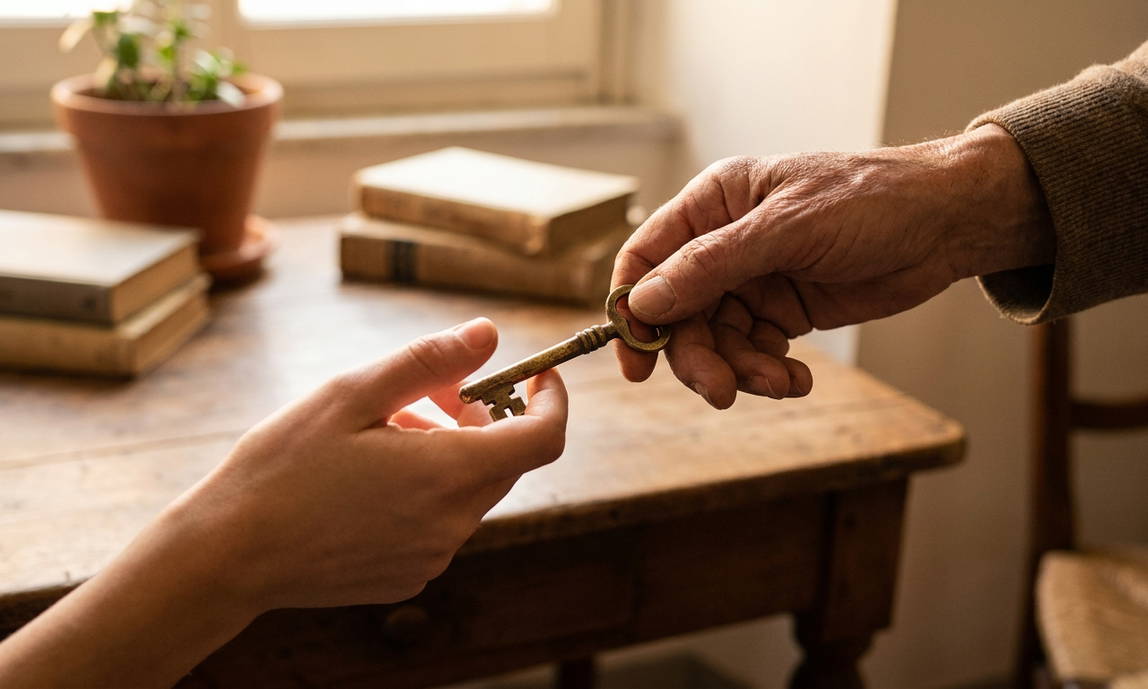
In this autumn of 2026, the start of the Italian academic year is once again overshadowed by a persistent issue: the caro affitti Bologna crisis. As thousands of students flock to the capital of Emilia-Romagna, renowned for its academic excellence, many are hitting an impassable financial wall. Faced with the alarming shortage of student housing and the exorbitant prices of standard studios, the distress is palpable. However, far from the saturated traditional real estate channels, a more human and economical alternative is gaining ground. At Roomlala, we are convinced that renting a room with a local host is now the best solution for combining a controlled budget with a successful integration.
Understanding the caro affitti crisis in Bologna in 2026
The phenomenon of "caro affitti" (literally "expensive rents") is not new, but it reached a critical breaking point this October 2026. Anger is growing in the streets of Bologna, reviving the student protests that marked previous years. The student union UDU has even organized symbolic tent camps on Piazza Scaravilli, transforming this place of knowledge into a true bastion of protest against a cost of living that has become unsustainable.
See also: Back to school 2026: How the 'Caro Affitti' is driving students towards homestays in Milan and Rome, Student housing crisis: Homestays facing the 2026 Italian rental price hike and Subletting in Switzerland in 2026: Rules, Rights and Best Practices
The figures speak for themselves and illustrate the severity of this price spike. This autumn, the average price of a single student room in Bologna has soared to reach around 585 euros per month. A survey by the consumer association Udicon, published in October 2026, reveals a chilling reality: for 93% of tenants surveyed, rent now absorbs more than a third of their monthly income. This financial burden is pushing many young people to radically rethink their study plans.
Faced with this emergency, public infrastructure is proving woefully inadequate. The shortage of social student housing is glaring: at the start of the 2026 academic year, more than 2,000 students applying for housing via the regional body Er.Go in Bologna did not get a place due to a lack of available beds. These young people are left to fend for themselves in a ruthless private market where demand far outstrips supply.
It is important to emphasize that this Italy housing crisis is not confined to the walls of Bologna. Although the "red city" is the current epicenter of the protest, the phenomenon is affecting all the country's major university hubs, such as Milan, Rome, or Florence. The uncontrolled proliferation of short-term tourist rentals has drastically reduced the housing stock available for long-term rentals, forcing, according to the Udicon survey, 37.2% of tenants to look for housing outside of Bologna, in the surrounding province.
Homestay: a supportive and economical answer
Faced with this alarming situation, it is becoming urgent to explore viable alternative solutions. With the traditional real estate market locked down, long-term homestay rentals are emerging as a true lifeline. At Roomlala, we are seeing a significant increase in connections between distressed students and hosts who have an unoccupied room. This formula does not just compensate for the lack of housing; it redefines how to live by focusing on mutual aid.
By choosing this path, students bypass traditional real estate agencies and their often exorbitant fees. They gain access to a "hidden" pool of housing, that of private individuals who wish to monetize an empty room while being helpful. It is an approach that fits fully into the collaborative economy, offering essential financial breathing room in the current context of student housing Italy 2026.
Beyond the purely transactional aspect, this alternative creates social ties in cities where anonymity and precariousness increasingly isolate young people. Hosts, often elderly people or families whose children have left the nest, find in this cohabitation a reassuring presence and a welcome supplement to their income. Let's explore the concrete advantages of this solution in more detail.
A controlled budget to counter inflation
The primary advantage of the student homestay is undoubtedly financial. Unlike the 585 euro average demanded for a room on the classic Bolognese market, the rates charged by private hosts are generally 20 to 30% lower. This substantial difference allows students to reallocate their budget to other necessities, such as food, transport, or school materials, thus easing the psychological pressure linked to precariousness.
Moreover, homestay rentals almost always include utilities in the advertised price. Electricity, water, heating, and internet connection are included, which avoids nasty surprises at the end of the month—something particularly dreaded during periods of energy inflation. It is a guarantee of financial stability that is crucial for a young person with limited and fixed income.
Let's take a concrete example: Marco, a student from Puglia, was desperately looking for a shared housing Bologna arrangement. Faced with the unaffordable prices in the city center, he opted for a room with Roberto, a pensioner living in the Bolognina district. For 400 euros per month, all charges included, Marco enjoys a spacious room and access to common areas, thus saving nearly 200 euros per month compared to a standard rental.
Finally, the flexibility of contracts is a major asset. Hosts are often more willing to accept variable-duration leases, adapted to university cycles (semesters, internships), without requiring the excessive guarantees (such as several months of security deposit or guarantors with astronomical incomes) that real estate agencies often demand.
Rapid integration and daily support
The human aspect is the true added value of the homestay. Arriving in a new city, especially in the midst of a housing crisis, can be an extremely stressful and isolating experience. Living with a local offers an immediate anchor. The host often becomes a valuable guide, sharing their knowledge of the city, tips for shopping at a lower cost, or the intricacies of the public transport network.
For international students, it is an unparalleled opportunity for cultural and linguistic immersion. Practicing Italian daily, discovering the real Bolognese gastronomy (far from the tourist traps), and understanding local customs happens naturally over a morning coffee or a shared meal. This dynamic fosters much faster and deeper integration than living in a student residence or a lonely studio.
Let's imagine the case of Sophie, a French student on Erasmus at the University of Bologna. By staying with Maria, a retired teacher, she not only perfected her Italian in record time, but she was also introduced to a caring neighborhood network. Maria helped her sign up for the municipal library and showed her the small local farmers' markets, making her stay infinitely richer.
This intergenerational solidarity is a powerful response to the crisis. It proves that in the face of public system failures and the voracity of the private market, citizens can organize themselves to create shared housing solutions that benefit everyone, both economically and socially.
How to search for shared housing in Bologna without falling into traps?
While homestay is an excellent solution, searching for housing in a market as tight as Bologna's in 2026 requires great caution. The desperation of students, ready to do anything to find a roof before classes start, inevitably attracts ill-intentioned people. It is crucial to approach this search with method and discernment.
Rushing is the tenant's worst enemy. Even if the start of the school year is approaching fast and the camps on Piazza Scaravilli remind everyone of the urgency of the situation, one should never give in to the pressure of a potential landlord who demands an immediate decision or an advance payment without solid guarantees.
At Roomlala, we make it a point of honor to educate our community on the risks inherent in searching for housing online. Here are our detailed tips for navigating this complex market safely and finding that hidden gem without compromising your financial or personal security.
Protecting yourself from online rental scams
The resurgence of online rental scams is a major point of vigilance this autumn. Scammers exploit the shortage by posting fake listings featuring misleading photos, often stolen from tourist rental sites or decoration catalogs. These listings generally offer magnificent rooms in the heart of Bologna at prices that defy all competition to bait desperate students.
The method is often the same: the so-called landlord claims to be abroad for professional reasons and asks for a security deposit or the first month's rent to be paid via untraceable money transfer services (like Western Union or MoneyGram) or bank transfers to foreign accounts, in exchange for sending the keys by mail.
A typical use case to avoid at all costs: you contact an advertiser for a superb room near Via Zamboni for 350 euros. They reply with a long personal story, refuse video calls under the pretext of a bad connection, and urge you to secure the room by sending 700 euros to a non-Italian IBAN account. This is a classic scam. Never pay money before having visited the accommodation (physically or via a live video tour) and signed a proper contract.
To protect yourself, always favor secure platforms that verify the identities of their users. Be wary of listings that are too good to be true, use Google's reverse image search to check if the photos of the property have been used elsewhere, and always demand transparent and direct communication with the host.
Best practices for a successful cohabitation
Once the scam has been avoided and the room found, the success of a homestay depends on clear communication from the very first days. Living with a host requires adjustments and mutual respect. It is essential to define the rules of communal living before even moving in to avoid any future misunderstandings.
Discuss openly everyone's expectations regarding the use of common areas (kitchen, bathroom, living room), quiet hours (particularly important if you are staying with an elderly person or a family with children), hosting outside visitors, and the division of household chores if you share the cleaning of the house.
A concrete example of a best practice is to write a short, informal "code of conduct" when signing the contract. For example, Giulia and her host Alessandro agreed in writing that the kitchen would be free to use until 9:30 PM, and that Giulia would take care of cleaning the shared bathroom once a week in exchange for free use of the washing machine. This clarity helped establish an immediate climate of trust.
Finally, don't forget that respect for privacy is paramount. A homestay is not a festive student apartment share; it is a delicate balance between conviviality and discretion. Knowing how to share a warm moment while respecting everyone's need for independence is the key to an enriching and peaceful experience.
Why choose Roomlala for your student housing?
In this context of acute caro affitti Bologna crisis, we at Roomlala are committed to offering a reliable and secure alternative. Our platform was designed to facilitate connections between private individuals with a free room and students in search of affordable housing, while eliminating the risks inherent in unverified classified ads on social media.
Security is our absolute priority. We systematically verify the profiles of our hosts and tenants (ID cards, phone numbers) to create a community of trust. Furthermore, our secure online payment system ensures that your money is protected: the amount for the first month's rent is kept in an escrow account and is only paid to the host 48 hours after your arrival, thus protecting you from any fraud or nasty surprises upon moving in.
For example, if you book a room from France for your studies in Bologna, you can carry out the transaction on Roomlala with complete peace of mind. If, upon your arrival, the room does not match the photos or the description at all (which is extremely rare thanks to our moderation), our customer service will intervene and your money will be returned to you. It is a guarantee that social media will never be able to offer you.
In conclusion, don't let the housing crisis ruin your university experience in Italy. Homestay is much more than a plan B; it is a solution for the future that is economical, safe, and deeply human. Join the Roomlala community today and find the ideal place to make your year in Bologna a success!


There are no comments yet.
Add a comment
You must log in to post a comment.