
 SEARCH
 LIST YOUR PROPERTY

The start of the university year is often synonymous with excitement, fresh starts and future plans. Yet, for the 2026-2027 academic year, finding a place to live in Portugal is proving to be more of an uphill battle than ever. Faced with constantly increasing demand and a saturated property market, finding student accommodation in Portugal for 2026 has become a major challenge for young people and their families.
At Roomlala, we are closely monitoring this strained situation. We know how much stress related to accommodation can impact academic success. That is why we have broken down the latest Portuguese government measures for you. From increased financial aid and the relaxation of certain administrative rules, to the need to find sustainable alternatives like a homestay, here is everything you need to know to approach this new academic year with peace of mind.
See also: 2026 university term in Lisbon and Porto: Homestays as the answer to housing shortages, 2026 university start in Portugal: Facing the crisis, homestays become the go-to solution and 2026 Housing Act: What changes for room rentals in Spain
An unprecedented student housing crisis for the start of the 2026 academic year
The Portuguese property market is going through a period of historic tension, and students are on the front line. Figures recently published for the start of 2026 present an alarming picture: the country is facing a record structural deficit. There is currently a shortage of nearly 119,000 beds to meet the massive demand from 227,000 students, whether they are Portuguese students moving far from their family home or international students arriving to take advantage of Portuguese academic excellence.
The Lisbon housing crisis is particularly striking. In the capital, the median rent for student accommodation has now reached the dizzying sum of €855 per month. Porto is not far behind, with a median rent amounting to €745. These amounts make the traditional rental market completely inaccessible to the vast majority of young people, especially as inflation is already weighing heavily on their daily budgets (food, transport, supplies).
Faced with this emergency, the Portuguese government launched the National Plan for Housing (PNAES), which promised to increase public accommodation capacity to 26,000 beds by the end of 2026. Unfortunately, delivery delays in the construction and renovation of university residences are keeping the private sector under intense pressure. Students are therefore forced to look for alternative solutions in a saturated and expensive private market.
It is in this extremely competitive context that it is crucial to know your rights. The government has had to adapt and adjust its financial support mechanisms to prevent thousands of students from giving up their studies due to a lack of housing. Let us take a detailed look at these new aid schemes coming into force for 2026-2027.
New student aid in Portugal: What is changing in 2026-2027
To counter the devastating effects of housing inflation, the Portuguese state has significantly increased student aid in Portugal. These measures aim primarily to protect the most vulnerable students and facilitate their access to higher education.
Historic increase in housing aid for scholarship holders
The first major new feature for this academic year concerns the basic housing allowance for displaced scholarship students. This has seen a significant increase, rising to 30% of the IAS (Social Support Index). In practical terms, this represents approximately €161 per month, compared to only €94 in previous years. This increase is a breath of fresh air for the tightest budgets.
But the state's effort does not stop there. Aware that public residences are packed, the government has introduced an exceptional allowance for scholarship holders forced to find housing in the private sector. The aid caps have been re-evaluated based on the local market reality: they now reach €500 per month in Lisbon, €419 in Porto, and €338 in Coimbra. Let us take the example of Tiago, a scholarship student admitted to the University of Lisbon: if he rents a room in the private sector, his aid can cover up to €500 of his rent, significantly easing his family's financial burden.
Furthermore, a much-anticipated administrative simplification measure has been enacted. Scholarship students are no longer strictly required to present a formal tenancy agreement registered with the tax authorities to receive this aid. They now only need to prove that they applied for a place in a public university residence and were refused due to lack of availability. This relaxation is a real revolution that allows funds to be unlocked much more quickly.
The creation of the Incentive Scholarship (Bolsa de Incentivo)
The other flagship measure for this start of the 2026 academic year is the creation of a brand new "Incentive Scholarship" (Bolsa de Incentivo). With a one-off amount of €1,075, this installation bonus is paid automatically to first-year students from the most modest households (the highest scholarship brackets).
This sum is designed to absorb the financial shock of the first few months of setting up. Indeed, between paying the first month's rent, the security deposit (the famous caution), registration fees, and buying school materials, the month of September is often a financial black hole. This aid aims to ensure that starting university is not hindered by a lack of immediate cash flow.
At Roomlala, we often notice that our hosts request a month's security deposit. For a student like Maria, who is leaving the Algarve to study in Porto, receiving this €1,075 scholarship in September allows her to secure her room with peace of mind, without having to take out a student loan or dip into her parents' vital savings.
Non-scholarship students: What aid is available for your shared housing in Portugal?
It is fundamental to distinguish clearly between the rights of scholarship students and those of non-scholarship students. The student middle class, although ineligible for standard social-criteria scholarships, is also suffering the full force of the price surge, particularly when looking for shared housing in Porto or Lisbon.
Housing supplement for non-scholarship students
The Portuguese government has provided a safety net for non-scholarship students whose family incomes are modest but slightly above the main scholarship thresholds. These students can receive a "housing supplement".
However, this supplement is capped. It amounts to a maximum of 50% of the amounts granted to scholarship holders. Using the caps mentioned above, a non-scholarship student could receive up to €250 per month in Lisbon (50% of €500), approximately €209 in Porto, and €169 in Coimbra. This is a significant amount of aid that can make the difference in balancing the monthly budget for a shared home.
To illustrate this, let us imagine Lucas and João who are sharing an apartment in Porto. The total rent is €800 (€400 each). Lucas, a non-scholarship student eligible for the supplement, could receive approximately €209 from the state, reducing his actual share of the rent to less than €200 per month. This is an essential financial strategy to incorporate into your search.
The strict requirement of a tenancy agreement
This is where the major point of vigilance lies for the start of 2026. Unlike scholarship students who now benefit from administrative tolerance, non-scholarship students are subject to very strict rules to receive their housing supplement.
They have the absolute obligation to provide official receipts (recibos de renda) or a written tenancy agreement registered with the Tax and Customs Authority (Finanças) to justify their expenses. Without these legal documents, the 50% aid will simply not be paid. It is therefore out of the question to accept informal or "off-the-books" rentals, at the risk of losing hundreds of euros in annual aid.
At Roomlala, we make it a point of honour to secure all your procedures. All our bookings result in clear supporting documents, and we strongly encourage our hosts to declare their income and provide the necessary contracts. In this way, our student tenants can build their aid application files with full legality and peace of mind.
Homestays: The best alternative to the shortage
Faced with this complex picture (exorbitant rents, unfinished public residences, conditional aid), one solution stands out as the most relevant, immediate, and human-centred alternative for the start of the 2026 academic year: homestays. This is the core business of Roomlala, and we are convinced that it is the most suitable response to the current crisis.
An immediate and highly economical solution
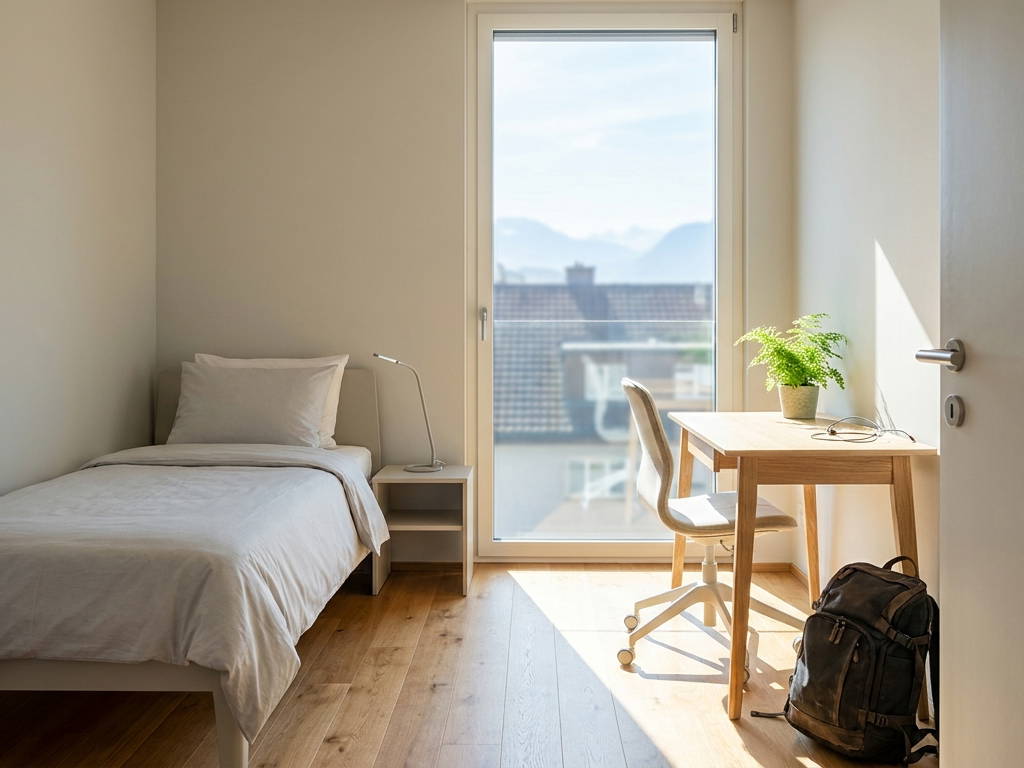
While median rents are soaring to €855 in Lisbon, a homestay allows you to halve or even triple your bill. Renting a room from a private individual generally costs between €300 and €450 per month, even in major Portuguese university cities.
Furthermore, the economic advantage does not stop at the base rent. In almost all homestay cases, utilities (water, electricity, gas, high-speed internet) are included in the displayed price. At a time when energy costs are fluctuating significantly, this is a guarantee of stability for a student's budget. No unpleasant surprises at the end of the month, no astronomical winter bills to share between flatmates.
It is also an immediate solution. Faced with the delays of the PNAES and the interminable wait for a hypothetical place in a residence, a homestay is available straight away. Thousands of Portuguese homeowners have spare rooms (children who have left to study, large houses) and are ready to welcome young people from the start of the academic year.
The human aspect and safety with Roomlala
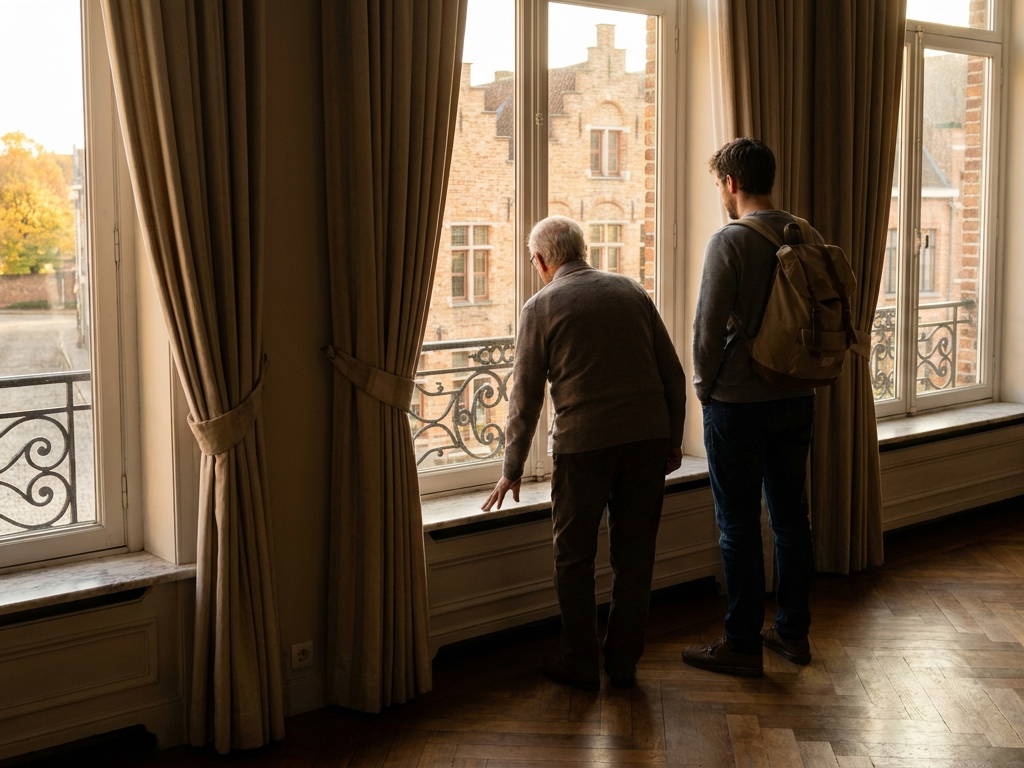
Beyond the purely financial aspect, a homestay offers an exceptional living environment, particularly for international students or those leaving the family nest for the first time. Arriving in a big city like Lisbon or Porto can be intimidating. Living with a local inhabitant means ensuring you have a reference point, someone who knows the neighbourhood, the good places to go, and who can help with the little daily hassles.
For foreign students, it is also the ultimate way to accelerate their learning of the Portuguese language and to truly immerse themselves in the local culture, far from the insular nature of international residences. It is an experience of intergenerational and intercultural sharing that is of inestimable value.
Finally, at Roomlala, safety is our absolute priority. We verify profiles, secure online payments, and provide a framework of trust thanks to certified reviews left by previous tenants. Furthermore, our platform allows for the creation of the necessary supporting documents so that non-scholarship students can claim their government aid without any issues. By choosing a homestay, you are choosing economic wisdom, human warmth, and administrative security.





There are no comments yet.
Add a comment
You must log in to post a comment.