
 SEARCH
 LIST YOUR PROPERTY

Every year, as the university term approaches, it is the same uphill battle. Finding student accommodation in Switzerland has become a real test of endurance. At Roomlala, we have been observing this situation closely: between 2022 and 2024, the total supply of rental accommodation in Switzerland dropped by 18%. In the face of this alarming shortage, a supportive and pragmatic solution has emerged with force: subletting. Indeed, subletting listings jumped by 42% over the same period, becoming an essential pillar of student housing. But be careful; while this practice is a fantastic opportunity, it follows strict rules. In 2026, how do you navigate the legal framework of subletting in Switzerland with peace of mind? A breakdown.
Subletting in Switzerland: A fundamental right in the face of the crisis
The housing crisis is hitting major Swiss university cities hard. Whether in Geneva, Lausanne, Zurich or Fribourg, students are faced with exorbitant rents and fierce competition for even the smallest studio. It is in this tense context that homestay accommodation and subletting make so much sense. For many primary tenants with a spare room, hosting a student is a wise way to share costs while providing an immense service.
See also: Student lease in Wallonia: Essential rules for renting a room in 2026, Student accommodation in Flanders: Everything you need to know about the student lease for the 2026 academic year and Back to school 2026 in Italy: The benefits of the Canone Concordato for renting out your room
It is crucial to recall a fundamental truth often overlooked: in Switzerland, subletting is a right for the primary tenant, not a mere favour granted by the landlord. This right is firmly anchored in law, specifically in Article 262 of the Code of Obligations (CO). Consequently, if you read a clause in your tenancy agreement that completely prohibits subletting, be aware that this is legally void according to Article 257 of the CO.
This right was also recently reaffirmed by Swiss citizens. During the federal vote on 24 November 2024, the public rejected by referendum (at 51.6%) a bill that aimed to significantly toughen the rules on subletting. This victory, supported in particular by the ASLOCA (Swiss Tenants' Association), guarantees the maintenance of a balanced legal framework, allowing tenants to continue to offer rooms to students without suffering from suffocating administrative constraints.
At Roomlala, we welcome this legal stability. It helps to reassure potential hosts. Do you have an unoccupied room? You have the right to sublet it. However, this right comes with unavoidable duties. The law protects the tenant, but in return, it requires total transparency towards the landlord. It is on this balance that the success of a peaceful cohabitation rests.
Obtaining the landlord's consent: The essential golden rule
Why is prior agreement essential?
While subletting is a right, doing it in secret is the worst of ideas. Prior agreement from the landlord (or the property management company) is absolutely mandatory. Subletting a room to a student without informing your landlord exposes you to severe sanctions, up to the immediate termination of your own lease for good cause. Never take this risk.
The good news is that the landlord cannot refuse your request arbitrarily. According to Swiss law, they can only object for three strict and clearly defined reasons. Firstly, if you refuse to communicate the terms of the subletting to them. Secondly, if the conditions of this subletting are abusive (particularly if you make a profit). Thirdly, if the subletting presents major disadvantages for the landlord (for example, overcrowding of the apartment or proven noise pollution).
Let's take a concrete use case: Marc, the tenant of a large 4-room apartment in Neuchâtel, has lived alone since his children left. He decides to sublet a room to Léa, a first-year student. Marc informs his property management company by detailing the rent requested and Léa's identity. The management company cannot legally object, because Marc respects all conditions and the apartment is far from overcrowded.
At Roomlala, we support our users through these steps. We advise you to always play the transparency card. A landlord reassured by an honest and clear approach will be a benevolent partner. Trust is the cornerstone of homestay accommodation.
Best practices for submitting your request
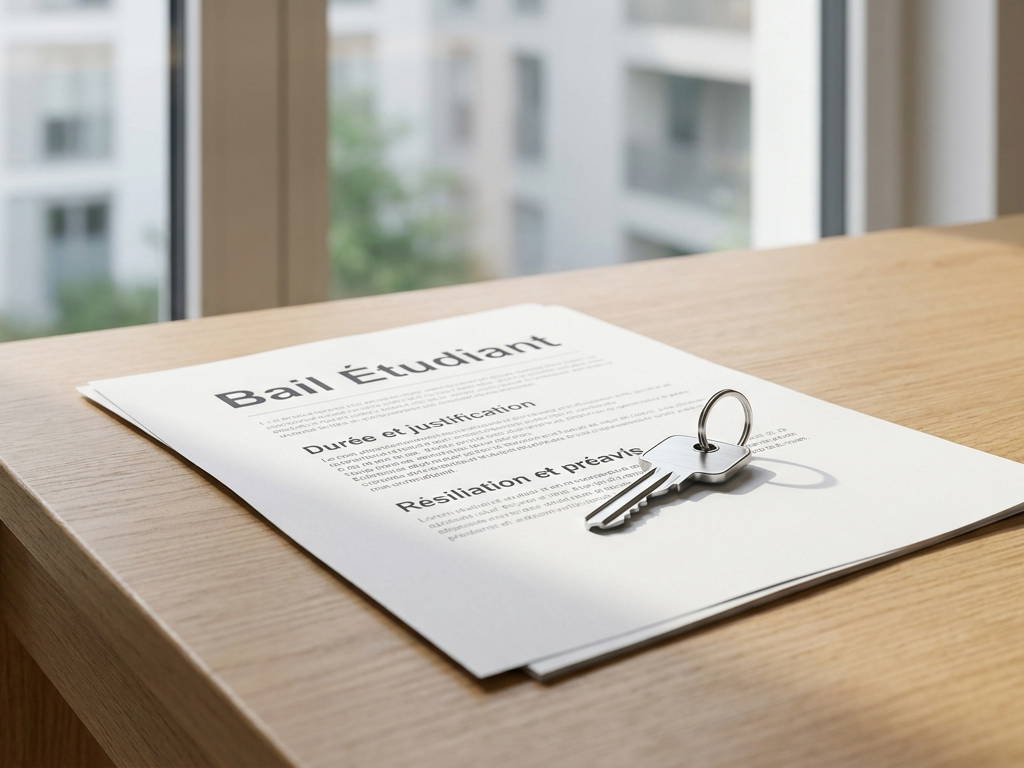
Although the 2024 reform, which required mandatory written agreement from the landlord, was rejected, common sense dictates that you should always leave a paper trail. At Roomlala, we highly recommend that you formulate your subletting request in writing, ideally by registered letter. This protects you in the event of a future dispute and proves your good faith.
Your letter must be precise and complete to leave no room for justified refusal. You must include the full identity of the student subtenant, the planned duration of the subletting (even if it is indefinite), the use that will be made of the room (student accommodation), and above all, the amount of rent you will receive.
Here is a list of elements to prepare for your file:
- A formal letter: Requesting consent for the subletting.
- The draft contract: A copy of the subletting contract you intend to sign with the student.
- Financial information: Details of the sub-rent calculation to prove the absence of profit.
- The subtenant's details: Surname, first name, and status (student).
Once the letter is sent, wait for the written response from your management company or landlord before handing over the keys to the student. In Switzerland, management companies are used to these procedures, particularly as the university term approaches. If your file is complete and respects the law, the agreement is only an administrative formality.
Rent and conditions: The strict prohibition on making a profit
Calculating the fair rent for your subtenant
This is the most critical point of vigilance in Swiss legislation: it is strictly forbidden to make a profit from a sublet. The purpose of this practice is to share costs, not for personal enrichment. If the landlord discovers that you are making a profit at the expense of a student, they have the right to demand the termination of your lease and the reimbursement of the overpayment.
The rent requested from the student must correspond only to the primary rent calculated pro-rata according to the surface area occupied. You must add a fair share of the charges (electricity, internet, heating). A reasonable surcharge (generally tolerated between 10% and 20% maximum) is only justified if the room is fully furnished by you, in order to compensate for the wear and tear of the furniture.
Let's take a concrete example to illustrate this calculation. Sophie rents a 100 m² apartment in Geneva for 2000 CHF per month, including charges. She wishes to sublet a 15 m² furnished room to a student. The student will also have access to the common areas (kitchen, living room, bathroom) which represent 50 m². The total surface area used by the student is therefore approximately 40 m² (their room + half of the common areas). The base calculation would be (2000 / 100) * 40 = 800 CHF. Sophie can add a 10% surcharge for the furniture, making a total rent of 880 CHF per month.
On the Roomlala platform, we encourage fair and supportive rates. In the face of the student housing shortage, offering an affordable rent, calculated as precisely as possible, means actively participating in the resolution of the crisis. Furthermore, a fair rent guarantees a healthy relationship without ulterior motives with your subtenant.
Drafting a solid subletting contract
In terms of subletting, the primary tenant becomes the landlord of the student. It is essential to understand that towards your own landlord, you remain the sole and only person responsible. If the student does not pay their sub-rent or causes damage in the apartment, the landlord will turn to you to obtain compensation.
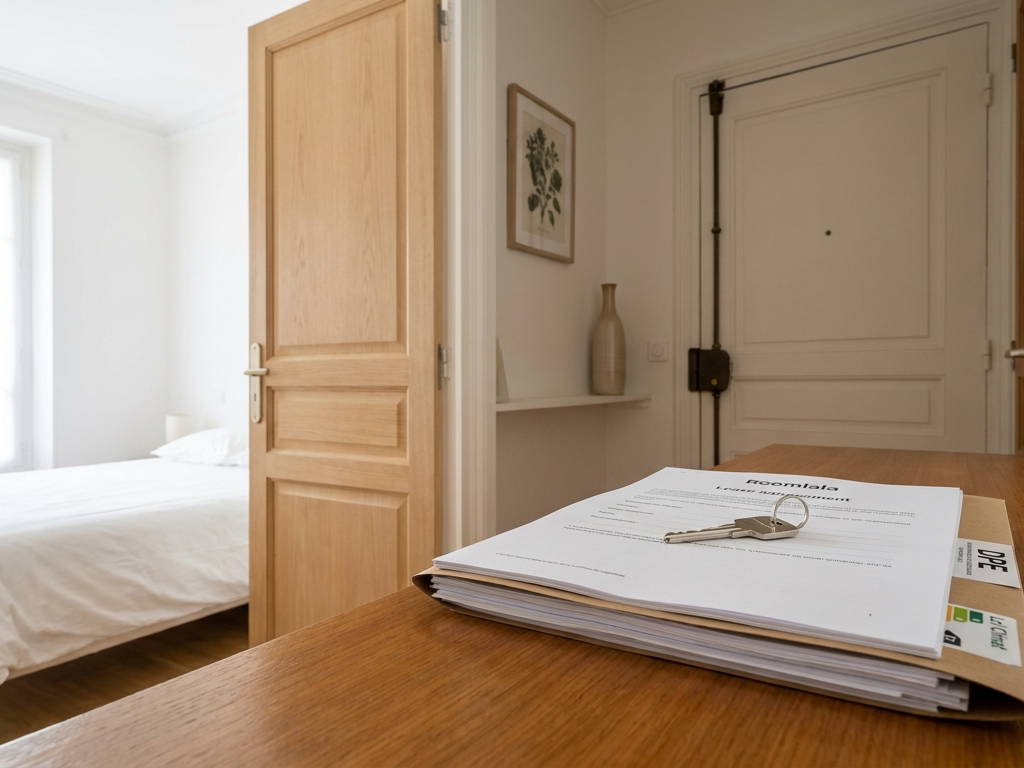
It is therefore absolutely crucial to sign a proper subletting contract with the student. This written document will protect both parties. It must clearly stipulate the amount of rent, the charges included, the termination conditions (the notice period), and the house rules. Never settle for an oral agreement, even if you get along very well during the viewing.
Don't forget to carry out a detailed inventory check at the start and end of the student's stay. This is a step often neglected in homestay accommodation, but it is vital to avoid conflicts related to possible damage. Moreover, you are entitled to request a security deposit from your subtenant, which cannot exceed three months' rent, to be deposited in a blocked bank account in their name.
Using a platform like Roomlala offers you a secure framework. We provide tools to facilitate connecting and we strongly recommend the use of standard contracts (such as those provided by the ASLOCA or the Swiss Confederation). Our goal is for this intergenerational or peer-to-peer shared housing experience to take place with the greatest peace of mind.
Hosting a student at home: A human and supportive adventure
Beyond the purely legal and financial aspects, subletting a room to a student is above all a fantastic human adventure. In the face of the housing shortage in Switzerland, opening your door is an act of strong solidarity. For many young people, finding a room with a host is the only viable option to continue their studies without falling heavily into debt.
For the primary tenant, it is also an opportunity to break the loneliness, energise their daily life, and discover new cultures, especially with international students. It is a win-win exchange where mutual respect and communication are key. Setting the rules of life from the beginning in the subletting contract helps ensure a harmonious cohabitation.
We advise you to organise a prior meeting (in person or by video) before confirming the sublet. Discuss your lifestyles, the use of the kitchen, and rules regarding guests. At Roomlala, we firmly believe that the human connection is just as important as respecting the legal rules of Article 262 of the CO.
In 2026, subletting is no longer a simple trend, it is a structural necessity of the Swiss real estate market. By respecting the golden rules—transparency with the landlord, fair rent, and a written contract—you transform a legal constraint into an exceptional opportunity. Ready to take the plunge and help a student find their future cosy nest? Join the Roomlala community and post your listing today, in complete security.


There are no comments yet.
Add a comment
You must log in to post a comment.