
 SEARCH
 LIST YOUR PROPERTY
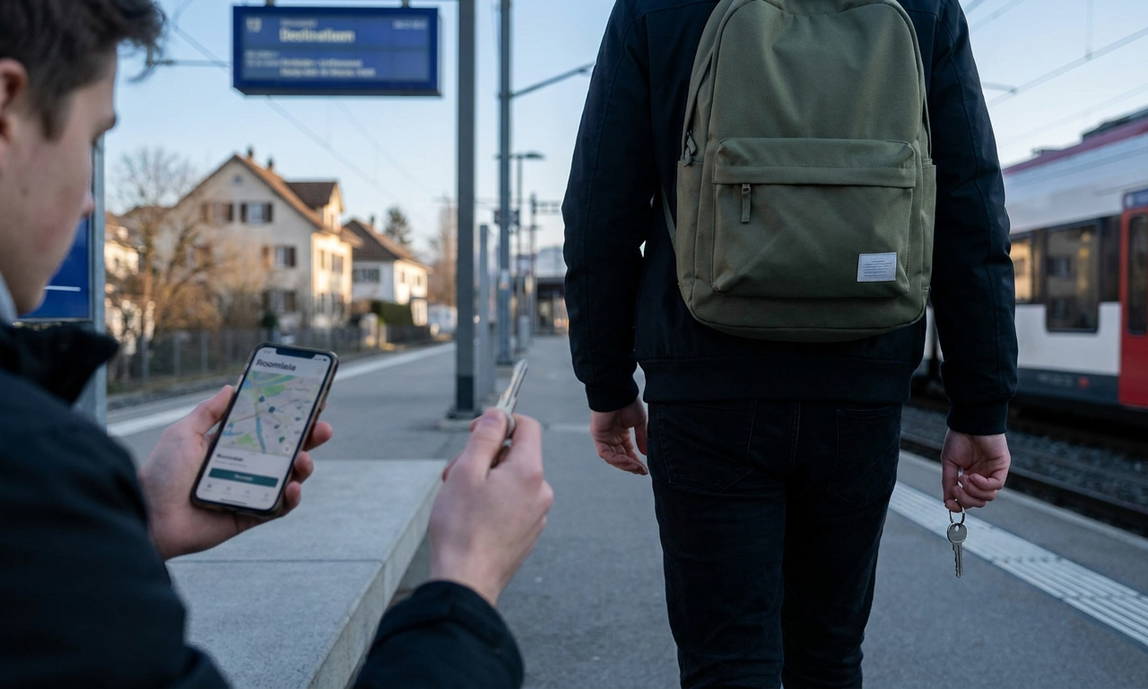
Finding a roof over your head in Switzerland's largest metropolis has never been so complex. At the end of this year, the hunt for student accommodation in Zurich 2026 feels like a real obstacle course for the thousands of young talents joining the lecture halls of ETH or the University of Zurich (UZH). Faced with a historic shortage and skyrocketing rents, traditional accommodation solutions are reaching their limits. At Roomlala, we are monitoring this situation closely and are convinced that it is time to rethink the way we live. Intergenerational cohabitation and renting out spare rooms in private homes are emerging today not only as a necessity, but above all as the best economic and human alternative. A deep dive into the heart of an unprecedented housing crisis and the discovery of a solution that benefits everyone.
The student housing shortage in Zurich in 2026: An alarming observation
Property indicators in the red
The situation in the Zurich rental market has reached a critical point. By the end of 2026, the vacancy rate in the city of Zurich had fallen below the symbolic and alarming threshold of 0.5%. In practical terms, this means there is almost no accommodation left on the open market. This extreme scarcity naturally leads to a surge in prices. According to the latest Swiss property market reports, rents in urban hubs are seeing a continuous rise, estimated at between 3% and 5% for 2026 alone.
See also: 2026 Student intake in Switzerland: The boom in intergenerational housing amid shortages, Quebec's Bill 31 in 2026: Impacts on lease transfers and alternative solutions and 2026 Brussels rent indexation: EPC and rules for shared housing
At the same time, hopes for a lull have been dashed by recent macroeconomic decisions. The Federal Office for Housing (FOH) maintained the mortgage reference rate at 1.25% in September 2026. This maintenance offers no general relief for existing leases, and additional charges, particularly those linked to energy, continue to weigh heavily on household budgets. The housing shortage in Switzerland is no longer a myth; it is a statistical reality that is hitting the most precarious populations hard, first and foremost students.
In this context, traditional university residences (such as those of the WOKO foundation) are saturated months, or even years, in advance. Waiting lists are growing, leaving many students in total uncertainty just weeks before the start of the academic year. Hotels and short-term rental solutions, which are overpriced, cannot be a viable answer for a full academic year.
Fierce competition for students
Zurich students are not just fighting among themselves to obtain a lease. They face direct and unequal competition from profiles with significantly higher purchasing power. Zurich, a major global economic hub, attracts thousands of highly qualified expatriates and young professionals (the famous "expats") every year. The latter, with comfortable Swiss salaries, monopolize small apartments and studios in the city centre.
Even the traditional shared housing in Zurich (or WG for Wohngemeinschaft) has become an ultra-competitive market. It is not uncommon to see shared housing listings receive more than a hundred applications in just a few hours. Interviews to secure a room turn into real casting sessions where financial dossiers often take precedence over personality. A student, with a limited budget and sometimes foreign guarantors, struggles to reassure property management agencies or lead tenants when faced with a young banking executive.
Take the example of Julien, a French student doing a master's degree at ETH. After three months of unsuccessful searches from abroad and around twenty virtual tours for conventional flatshares, he found himself with no solution two weeks before the start of classes. It is this brutal reality that is now pushing students to explore new paths, ones that are more supportive and less dictated by the classic housing market.
Homestay in Zurich: A sustainable and human alternative
A financial breath of fresh air for students
Faced with this wall, homestay in Zurich appears to be the ideal solution. Renting a room from a private individual makes it possible to bypass the drastic requirements of property management agencies. At Roomlala, we find that prices offered by private hosts are on average 20% to 30% lower than those for an independent studio on the open market. Furthermore, these rooms are generally already furnished and equipped, which avoids the student having to invest in expensive furniture for a temporary stay.
The economic benefits do not stop at the rent. In a homestay, utility costs (water, electricity, heating, internet) are generally included in the monthly fee. The student thus avoids unpleasant surprises at the end of the year with exorbitant utility bill adjustments. They also do not have to open accounts in their name, a process that is often complex for a new arrival in Switzerland.
Beyond the financial aspect, it is also a major asset for integration. Living with a local from Zurich or a local family allows you to practise Swiss German (or standard German), discover the ins and outs of life in Switzerland (waste sorting, local customs, transport tips) and break the isolation often felt by international students during their first few months.
A welcome extra income for hosts
On the side of homeowners or lead tenants, opening your door to a student in 2026 has become a real financial strategy to offset inflation. With the rise in consumer prices and energy costs, having an unoccupied room (following the departure of a child, for example, or a divorce) represents a loss of potential income. Renting this room makes it possible to generate a significant supplementary income, often partially tax-exempt depending on the canton, which helps to pay the main rent or the mortgage.
Take the case of Madame Keller, a retiree living in a large apartment in Oerlikon. With a small pension and co-ownership charges that have jumped by 15% in two years, she decided to rent out her daughter's old room on Roomlala. Not only does she receive 800 CHF per month to secure her budget, but she also appreciates the reassuring and kind presence of a young medical student in the evenings.
At Roomlala, we make it a point of honour to secure this relationship. Online contracting, profile verification, and the secure payment system guarantee total peace of mind for the host. They no longer have to fear unpaid rent and can choose the rental duration that suits them, whether for a semester or the full year.
Geographical strategy: Moving away from the hyper-centre to find better housing
One of the most frequent mistakes made by students looking for student accommodation in Zurich 2026 is to target exclusively the central districts (Kreis 1 to Kreis 6) or the immediate surroundings of the campuses. However, in these areas, prices are prohibitive and scarcity is absolute. To succeed in your search, it is imperative to nuance your geographical criteria and accept moving a little further out.
The Zurich public transport network (ZVV) and the Swiss Federal Railways (CFF) are among the densest and most punctual in the world. Living in neighbouring municipalities or even in neighbouring cantons is not a handicap. Towns like Dietikon, Schlieren, Wallisellen, or Dübendorf offer much cheaper homestay rental rates, while being connected to the main railway station of Zurich (Hauptbahnhof) in 15 to 20 minutes by train (S-Bahn).
It is even wise to look towards the canton of Aargau or the city of Winterthur. For example, a student living in a homestay in Baden (Aargau) can reach the ETH in less than 35 minutes of door-to-door travel. The difference in rent more than offsets the purchase of a general travel pass (AG) or a student route pass. By expanding their search radius on our platform, students multiply their chances tenfold of finding a welcoming and affordable host.
Legal framework for subletting in Switzerland: What you need to know
If you are a tenant of your apartment and you wish to offer a spare room to a student, Swiss law authorises you to do so, but under certain strict conditions that it is crucial to remember at the end of 2026. Swiss tenancy law (Code of Obligations) regulates subletting to avoid abuse.
Here are the golden rules to strictly follow:
- Prior agreement of the landlord: A lead tenant must mandatorily obtain the consent of their landlord (or the property management agency) before subletting a room. This agreement should ideally be requested and obtained in writing.
- Transparency of conditions: You must communicate the conditions of the sublet to your agency, in particular the amount of rent requested from the student and the identity of the latter.
- Prohibition of making an abusive profit: Subletting must not be an excessively lucrative activity. The rent requested from the student must be proportional to the surface area of the room rented in relation to the total rent, while adding a reasonable supplement (generally 10% to 20%) for the wear and tear of furniture if the room is furnished, and a share for utilities (internet, electricity).
The landlord can only refuse the sublet if the tenant refuses to communicate the conditions to them, if the conditions are abusive, or if the sublet presents major inconveniences for the owner (for example, overcrowding of the apartment). By respecting these simple rules, you ensure a serene and 100% legal cohabitation.
In conclusion, faced with the student accommodation in Zurich 2026 crisis, flexibility is the watchword. Whether you are a student in search of a cosy nest to pass your exams, or a Zurich resident with a spare space, renting a homestay via Roomlala represents the future of urban accommodation. It is an act of economic common sense, a gesture of intergenerational solidarity, and the promise of beautiful human encounters in the heart of Switzerland.


There are no comments yet.
Add a comment
You must log in to post a comment.