
 SEARCH
 LIST YOUR PROPERTY
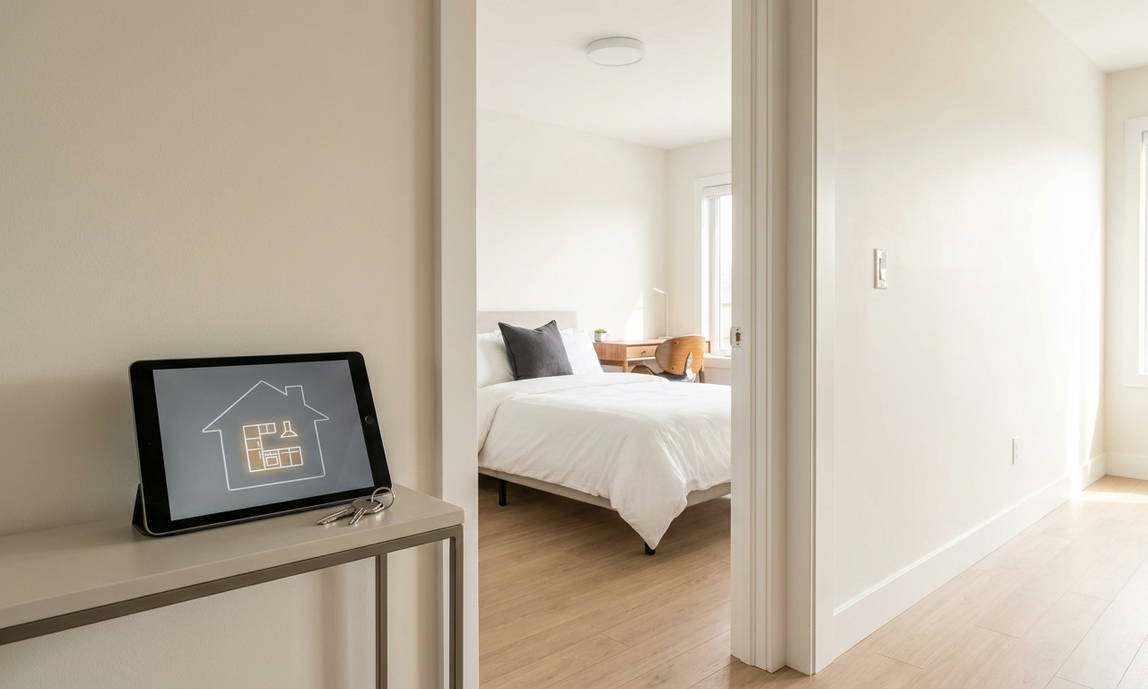
In this summer period of July 2026, the excitement is already building as we approach the start of the academic year in September. The Ontario housing market, particularly tight in major cities like Toronto, Ottawa, and Waterloo, is facing unprecedented rental demand. Students, young professionals, and newcomers are desperately seeking affordable accommodation. On the other side, many hosts have an unoccupied room and would like to generate extra income to cope with inflation. However, hesitation persists: the fear of getting involved in a complex legal framework. At Roomlala, we often hear this concern. That is why we have decided to demystify the Ontario Residential Tenancies Act. The good news? If you share your home with your tenant, you benefit from a major exemption that offers exceptional freedom and peace of mind. Let’s dive into the details of this legislation together to allow you to host with complete confidence.
Ontario Residential Tenancies Act: Understanding the RTA exemption
The Residential Tenancies Act (RTA) is the piece of legislation that governs the relationship between hosts and tenants in Ontario. It is known for being very protective of tenants. However, there are notable exceptions that every potential host should know. At Roomlala, we want to reassure you: the law provides a specific and simplified framework for hosts who open the door of their own home.
See also: Student housing crisis in Belgium: Why a homestay is the solution for the 2026 academic year, New sub-letting rules in Switzerland: What tenants need to know in 2026 and 2026 Rental Price Crisis: Why homestay is saving the start of the academic year for Italian students
Sharing living spaces: the key to flexibility
The core element to remember is found in section 5(i) of the Ontario Residential Tenancies Act. This text states very clearly that the RTA does not apply to accommodation where the tenant is required to share a kitchen or bathroom with the host or their immediate family members (spouse, child, or parent). In other words, if you rent a room in your primary residence and the occupant uses your kitchen to prepare meals or your bathroom to shower, the rental agreement completely avoids the strict rules of the RTA. This RTA exemption is a game-changer for you as a host.
To give you a concrete example: imagine you are renting a converted basement room in your house in Mississauga. If this basement does not have its own equipped kitchen and the student has to go upstairs to use your fridge and stove, the exemption applies automatically. You are not subject to the RTA. This is a fundamental distinction that aims to protect the privacy and security of hosts sharing their personal space.
It is important to note that this notion of sharing must be genuine and planned from the start. If you own a duplex and rent out the upper floor which is completely independent (with its own kitchen and bathroom), you will not be able to claim this exemption, even if you occasionally allow the tenant to use your washing machine in the basement. Sharing the kitchen or bathroom is the absolute criterion used by provincial legislation.
Occupant status: boarder vs. traditional tenant
Since the Ontario Residential Tenancies Act does not apply in this shared context, what is the status of the person you are hosting? Under Ontario law, this occupant is not considered a "tenant" within the meaning of the RTA, but obtains the status of a "boarder" or "lodger". At Roomlala, we emphasize the importance of this lexical and legal nuance, as it defines all of your rights and obligations.
A traditional tenant enjoys security of tenure, which means it is extremely difficult to end their lease without a specific reason validated by the Landlord and Tenant Board (LTB). Conversely, the boarder is bound to you by a simple common law agreement (classic contract law). The relationship is therefore governed by what you have agreed upon, in writing, upon their arrival.
For example, if you rent a room to a young professional for a duration of six months, and you grant them the status of a boarder thanks to the shared bathroom, they will not have an automatic right to remain in the property at the end of the six months if you wish to reclaim the room to house a family member. This flexibility is the main asset for renting a room in your home in Ontario without fear.
Concrete benefits for Ontario hosts in 2026
The RTA exemption is not just a simple legal detail; it translates into tangible and immediate benefits for managing your accommodation. Faced with the economic context of 2026, marked by fluctuations in energy costs and property taxes, this flexibility is more necessary than ever for hosts who wish to make their available space profitable.
Pricing freedom and exemption from rent control
One of the most restrictive aspects of the Ontario Residential Tenancies Act for traditional landlords is provincial rent control. For the year 2026, the Ontario government has set the legal rent increase rate at 2.1%. If you were subject to the RTA, you could not increase your tenant's rent beyond this percentage without obtaining special approval, which is often long and tedious. But as a host renting to a boarder, you are completely exempt from this rule.
This pricing freedom allows you to adjust the rent at the end of each contract period based on economic reality. Let's take a frequent use case: you host an international student from September to May. If, during the winter, your heating and electricity bills skyrocket, you have the freedom, when signing a new contract for the following year, to propose a re-evaluated rent that covers these new expenses. The boarder is free to accept or look for another place, but you are not constrained by the 2.1% cap.
At Roomlala, we still advise you to remain reasonable and transparent. A justified and explained increase is always better perceived and guarantees a healthy relationship with your guest. Flexibility should not exclude fairness, which is the basis for successful cohabitation.
Flexibility in management and contract termination
The other major advantage concerns the end of the contract or eviction. In the classic RTA system, evicting a tenant for non-payment or nuisance requires filing specific forms and waiting for a hearing before the Landlord and Tenant Board (LTB), where waiting times can sometimes stretch over several months. As a host sharing your living spaces, you are not subject to this specific jurisdiction.
If the cohabitation goes poorly or if the boarder stops paying their rent, you do not need the LTB's approval to end the agreement. The general rule of contract law simply requires that you provide "reasonable notice". Although the law does not define an exact number of days, case law generally considers notice equivalent to the rent payment period (e.g., 30 days if rent is paid monthly) to be reasonable.
In extreme cases of danger or violence, this notice can even be immediate. Imagine that a guest behaves in a threatening manner towards your children in the shared kitchen. You have the right, with the assistance of law enforcement if necessary, to ask them to leave the premises immediately, without having to wait months for an LTB decision. This is the guarantee of your security at home.
How to properly draft your homestay agreement in Canada
Not being subject to the Ontario Residential Tenancies Act does not mean you don't need rules. Quite the contrary! It is precisely because the RTA does not apply that your contract becomes the absolute reference document. At Roomlala, we make it a point of honor to support you in this formalization process to avoid any future disputes regarding shared housing legislation in Toronto or elsewhere in Ontario.
The first point of caution, and not the least: it is strongly recommended not to use the Ontario Standard Form of Lease to rent a room in your home. This form was designed specifically for rentals subject to the RTA. Using it could create serious legal confusion. A judge might decide that, by using this form, you implicitly agreed to be subject to the rules of the RTA, thus voiding your exemption. You therefore need a specific homestay agreement Canada, often called a "cohabitation agreement" or "boarder agreement".
Here are the essential elements we recommend you include in this written contract:
- The explicit mention of shared spaces: Write in black and white that the host and the boarder share the kitchen and/or the bathroom. This is the proof of your exemption.
- Financial terms: The amount of rent, frequency of payments, payment method, and any security deposits (which are allowed in this context, unlike the RTA).
- Duration and notice: Specify if the agreement is for a fixed term or month-to-month, and clearly state the notice period required to end it (e.g., 30 days).
- Common living rules: Quiet hours, policy regarding guests (guest policy), division of household chores in common areas.
Let's take an application example: you are hosting a young professional. In your cohabitation agreement, you specify that visits from outside guests are not allowed after 10 PM to preserve the household's tranquility. If they repeatedly break this rule, you can rely on this signed contract to give them notice, which would be much more complex to justify under the RTA.
Disputes and points of caution: What you absolutely must know
Even with the best contract and a verified profile on Roomlala, disagreements can arise. It is crucial to understand how disputes are settled outside the RTA and to know the pitfalls to avoid so you do not lose your privileged status.
The prior residence rule
This is an absolute point of caution that many hosts ignore. For the section 5(i) exemption to apply, you (the host) must reside in the home before the tenant moves in, or at least move in at the same time. If you buy a house, immediately rent the rooms to students, and decide to move in yourself six months later, the exemption will not work retroactively. The students will be considered tenants protected by the RTA. Therefore, ensure the house is your actual primary residence at the time of signing the agreement.
Form A1 and the Small Claims Court
What happens in the event of a dispute? Since the Landlord and Tenant Board (LTB) does not have jurisdiction to judge cases involving boarders, you will have to turn to the Small Claims Court for any financial dispute, such as unpaid rent or material damage caused to your furniture. It is a classic civil procedure, often faster than the LTB for recovering debts.
However, it sometimes happens that a guest refuses to leave the premises, claiming they are a tenant protected by the RTA. In this scenario, the police may sometimes hesitate to intervene without an official document. This is where Form A1 comes in. In case of uncertainty or contestation regarding the application of the law, you (or the tenant) can file a Form A1 with the LTB. An adjudicator will then officially rule on the fact that the RTA does not apply to your situation (thanks to the proof of sharing the kitchen/bathroom). With this order, you will have an indisputable legal basis to proceed with the eviction.
Effective use of common areas
One last fascinating and vital legal detail: the simple fact that a tenant refuses to use common areas is not enough to cancel the exemption. Imagine you are hosting a student who decides only to eat meals delivered via UberEats and installs a mini-fridge in their room, never setting foot in your kitchen. Could they suddenly claim the protection of the RTA under the pretext that they no longer "share" the kitchen? The answer is no. As long as the sharing of the kitchen or bathroom was explicitly planned and available in the initial agreement, the Ontario Residential Tenancies Act exemption remains valid. Your legal protection does not depend on the occupant's lifestyle habits, but on the layout of the home and the initial contract.
In conclusion, renting a room in your home in Ontario is a fantastic opportunity for the start of the 2026 academic year, provided you master these legal nuances. Provincial legislation is on your side when it comes to sharing your living space. At Roomlala, we are proud to offer you a secure platform to find the ideal candidate. By combining our verification tools with a solid cohabitation agreement, you have all the cards in hand to live an enriching, profitable, and stress-free hosting experience.



There are no comments yet.
Add a comment
You must log in to post a comment.