
 SEARCH
 LIST YOUR PROPERTY
Faced with new real estate market constraints and the rental demand that is exploding for the start of the 2026 academic year, many hosts are asking the same question: how can I rent out a room in a flexible, legal, and secure way? At Roomlala, we know that welcoming a tenant into your home can sometimes raise questions, particularly regarding legal and financial aspects. Between the risks of unpaid rent and tightening regulations, choosing the right contract is essential. This is where the 2026 mobility lease comes into play. Specifically designed for temporary stays, this contract is currently the most advantageous legal tool for hosts wishing to accommodate students or travelling professionals. In this article, we explain in detail why the 2026 mobility lease is the perfect solution for securing your rental income while maintaining great freedom.
2026 mobility lease: What changes this year for hosts?
The standard duration and the new 18-month extension
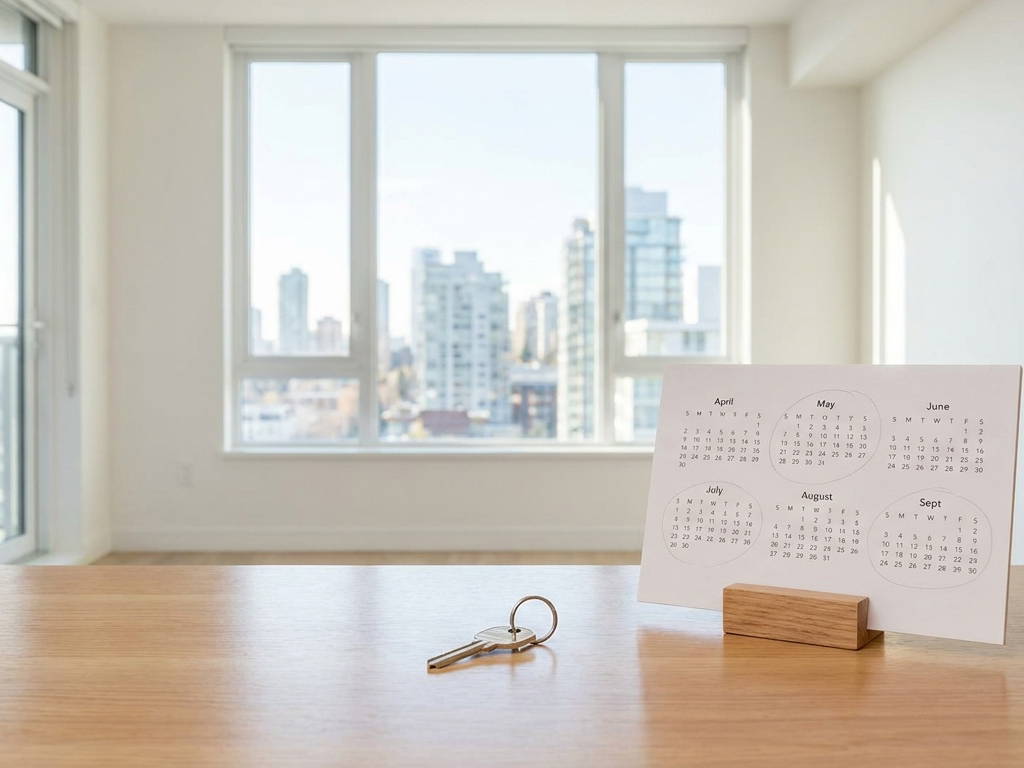
The mobility lease has always been defined as a short-term furnished rental contract. Historically, it has allowed for renting a property or room for a duration of 1 to 10 months maximum. The great strength of this contract lies in the absence of automatic renewal. At the end of the agreed period, the tenant must vacate the premises, which guarantees you will get your room back on a specific date. At Roomlala, we see that this flexibility is particularly appreciated by hosts who wish, for example, to rent out their guest room during the university year and reclaim it for their family during the summer.
See also: Rise in the council tax surcharge in 2026: Rent out a room long-term to make your home pay for itself, Cedolare Secca 2026: Tax benefits for renting out a student room in Italy and New CIN regulations in Italy: Why hosts are turning to shared housing in 2026
However, the year 2026 marks a major turning point. Thanks to the recent law of 26 November 2025, a long-awaited legal update has come into force. It is now possible to extend the duration of this lease up to 18 months, provided the property is located in an area classified as a "residence for employment purposes". This measure aims to facilitate housing for young professionals and workers on long missions who were struggling to find intermediate housing solutions. For you, as hosts, this means even more opportunities to sign long contracts without committing to a standard one-year renewable furnished lease.
Let’s take a concrete example to illustrate this novelty. Imagine you have a spare room in Lyon, a dynamic city where many companies send employees on assignment. Before this law, you could only offer a mobility lease for a maximum of 10 months. If your tenant’s assignment lasted a year, you would have had to switch to a standard lease, which is much more restrictive. Today, if your area is eligible, you can cover the entire 14 or 16-month mission with a single, fluid, and predictable contract.
A target audience strictly defined by legislation
One of the specificities of the mobility lease is that it is not intended for just any tenant. The law very strictly defines the public eligible for this type of contract. For the lease to be valid, the tenant must be in one of the following situations on the date the contract takes effect. It is your responsibility, as a host, to verify this condition. At Roomlala, we support you in understanding these criteria and avoiding any errors when selecting your future tenant.
Here is the exhaustive list of profiles eligible for a mobility lease in 2026:
- Students: Ideal for student room rentals, perfectly covering the university year from September to June.
- Apprentices and interns: Perfect for young people in vocational training who need to be housed near their company for a few months.
- People in vocational training: Adults in retraining or professional development.
- Civic service volunteers: Young people committed to missions of general interest for 6 to 12 months.
- Workers in professional transition or on temporary assignment: Employees relocated by their company for a specific duration.
It is crucial to understand that if your potential tenant does not fit into one of these categories (for example, a permanent employee with a standard probationary period, or a retiree), you cannot use the mobility lease. You would then need to look towards standard furnished rental regulations. This restriction is the trade-off for the great flexibility offered by this contract. We advise you to always ask for appropriate supporting documents (student ID, internship agreement, mission order) from the very first exchanges on our platform.
Why choose this contract over the new furnished rental regulations?
The legal and profitable alternative to the Le Meur law
The 2026 real estate landscape is strongly marked by the application of the Le Meur law. This legislation has significantly tightened the conditions for short-term tourist rentals, such as those on Airbnb. Between the drastic reduction in tax allowances, the overnight stay quotas imposed by many town halls, and the compensation requirements in large urban areas, traditional seasonal rentals have become a real ordeal for many hosts. Many see their profitability falling and are looking for viable alternatives.
It is in this context that the 2026 mobility lease stands out as the ideal, or even superior, fallback solution. By opting for this contract, you fall outside the scope of restrictive tourist rental regulations, while retaining the tax benefits of the LMNP (Non-Professional Furnished Rental) status. You continue to depreciate your property and deduct your expenses, all while ensuring regular income over several months. At Roomlala, we are observing a massive transition of our hosts towards this model, which combines profitability and peace of mind.
Let’s imagine the case of Marc, the owner of a beautiful apartment in Bordeaux. Until 2025, he rented out a room by the night. With the new law, his taxes soared and the town hall imposed heavy administrative procedures on him. By switching to the mobility lease, Marc now hosts oenology students for periods of 6 to 9 months. He no longer has to manage endless rotations, daily cleaning, or town hall constraints, all while maintaining a very comfortable level of rental income thanks to his preserved LMNP status.
An ideal flexibility for renting a room in your own home
Renting a room in your own home requires a certain amount of flexibility. You share your daily life, your common areas (kitchen, bathroom), and it is natural to want to keep control over the duration of this cohabitation. The legislation surrounding renting a room in one's own home can sometimes seem complex, but the mobility lease simplifies things. Unlike a standard one-year furnished lease, where the tenant can stay indefinitely if they do not provide notice, the mobility lease has a programmed end date from the very first day.
This visibility is a major psychological asset for hosts. You know exactly when your tenant will leave. Furthermore, if you get along well and the tenant needs to stay a little longer (within the limit of the 10 legal months, or 18 months depending on the new exemption), a simple addendum to the contract is sufficient to extend the initial duration. Be careful, however, that the total duration can never exceed the legal ceiling. Once this ceiling is reached, the tenant must leave, or you must sign a standard furnished lease.
At Roomlala, we recommend that you use this flexibility to test intergenerational shared housing or hosting young professionals. For example, if you are a young retiree and want a little company and some extra income during the winter, you can sign a 5-month mobility lease with an intern from November to March. In the spring, you regain full use of your accommodation to host your grandchildren. It is the promise of a tailor-made rental, perfectly adapted to your lifestyle.
Securing your income without a security deposit: The magic of the Visale Guarantee
The strict prohibition of the security deposit: a false problem
This is often the point that frightens hosts the most when they discover the mobility lease: the law strictly forbids requiring a security deposit from the tenant. In a standard rental, this sum (equivalent to one or two months' rent) is used to reassure the host in the event of damage or unpaid rent. The absence of this direct financial safety net can seem like a huge risk, especially when you are entrusting a furnished and well-equipped room.
However, at Roomlala, we want to reassure you: this prohibition is actually largely compensated for by state-provided mechanisms that are much more powerful than a simple security deposit cheque. The government’s goal, by prohibiting the security deposit, was to facilitate access to housing for often precarious groups (students, interns) who do not always have the necessary cash advance. In exchange, the State has put in place free institutional guarantees to protect hosts 100%.
It is therefore useless, and especially illegal, to bypass this rule. If you demand a security deposit cheque under the table when signing a mobility lease, you expose yourself to heavy penalties and the nullity of certain clauses in your contract. The best practice is to turn to the official and essential solution: the Visale guarantee, managed by Action Logement, which has also been significantly strengthened this year.
The 2026 reform of the Visale Guarantee: unprecedented limits
In January 2026, the Visale guarantee underwent a major reform, making it even more attractive for hosts. This system, which is completely free for both you and the tenant, acts as an ultra-solid institutional guarantor. In the event of unpaid rent or rental damage, it is Action Logement that reimburses you directly and quickly, before taking action against the tenant to recover the sums owed. You therefore have no financial stress to worry about.
The big news in 2026 concerns the coverage limits. Faced with inflation and rising rents in large metropolitan areas, Action Logement has revised its scales upwards. From now on, the Visale guarantee covers rent (including charges) of up to 1940 euros in zone 1 (Paris and its inner suburbs), and up to 1500 euros in the rest of France. Furthermore, access conditions have been relaxed for seasonal workers, a very common profile for mobility leases.
Let’s take the case of Sophie, who rents an independent room in her Parisian apartment. She signs an 8-month mobility lease with a young professional on a temporary mission. The rent is set at 850 euros per month. Sophie requires her tenant to obtain their Visale visa before signing. A few months later, the tenant faces a life incident and can no longer pay their rent. Sophie declares the unpaid rent on her Action Logement account, and she is compensated within a few weeks. She lost no income and did not have to start long legal proceedings. It is absolute peace of mind.
Traps and points of vigilance: Avoiding lease requalification
The absolute requirement for proof of mobility
While the 2026 mobility lease is a fantastic tool, it remains a highly regulated contract. The main trap into which some ill-informed hosts fall is forgetting the proof of mobility. As we have seen, the tenant must prove that they belong to one of the eligible categories (student, intern, professional mission, etc.). But be careful, it is not enough to declare it verbally or write it in the contract.
The law strictly requires that the motive for mobility be proven by an official document, and that this document be attached to the rental contract upon signing. This could be a valid student card for the current year, an internship agreement signed by the school and the company, an apprenticeship contract, or a certificate from the employer stating the temporary nature of the mission. At Roomlala, we systematically remind you to collect these documents before finalizing your rental.
What happens if you forget this crucial step? The risk is great: in the event of a dispute, the judge will consider that the conditions of the mobility lease are not met. Your contract will then be automatically reclassified as a standard furnished rental, subject to the 1989 law. This means that the lease will change from a fixed duration of a few months to a one-year duration renewable by automatic renewal, with much stricter notice rules for the host. You would thus lose all the flexibility that made your initial decision worthwhile.
Rent control and energy constraints (DPE)
Finally, it is essential to remember that the mobility lease, although short-term, does not escape the major rules of housing policy in France. Two major points of vigilance should hold your attention in 2026: rent control and the rules related to the Energy Performance Certificate (DPE).
First of all, if your accommodation is located in a high-demand area (such as Paris, Lille, Lyon, Bordeaux, Montpellier, etc.), the mobility lease is subject to rent control. You cannot set the price of your room freely. The base rent must not exceed the maximum reference rent set by prefectural decree. Rent supplements are possible, but they are very strictly controlled (for example, for an exceptional view or luxurious equipment). Find out about the scales for your municipality before publishing your listing on Roomlala.
Secondly, the Climate and Resilience law continues to apply rigorously in 2026. The mobility lease is subject to a strict freeze on rent increases between tenants if your accommodation is classified as an energy-inefficient property (DPE F or G). Concretely, if you re-rent your room to a new student at the start of the 2026 academic year, you will not be able to increase the rent compared to the previous tenant if your DPE rating is poor. Furthermore, do not forget that the prohibition on renting out properties classified as G is in force, and that properties classified as F will follow very shortly. Therefore, ensure that your accommodation meets energy decency criteria before getting started.
In conclusion, the 2026 mobility lease is undoubtedly the most suitable solution for hosts wishing to rent a room with flexibility and security. By combining this contract with the power of the Visale guarantee, and by scrupulously respecting the eligibility and control rules, you ensure yourself a serene start to the season and optimized rental income. Do not hesitate to use the Roomlala platform to find your future trusted tenants and benefit from our expertise throughout your rental project.




There are no comments yet.
Add a comment
You must log in to post a comment.