
 SEARCH
 LIST YOUR PROPERTY
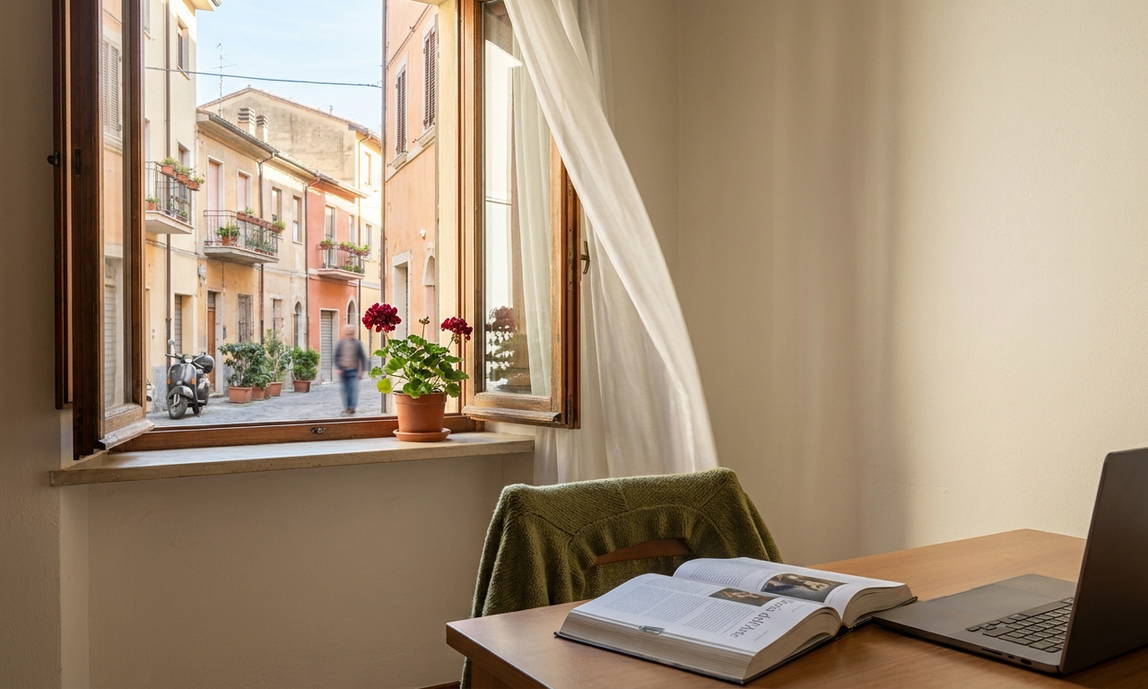
For several years, Italy has been facing a student housing crisis that continues to worsen. At this pivotal time as preparations for the start of the 2026 academic year get underway, the student protest movement—infamously known as 'caro affitti 2026'—is resonating louder than ever in the country's major university cities. The tents pitched in front of the prestigious universities of Milan, Rome, or Bologna are no longer mere fleeting acts of rebellion, but a lasting symbol of a generation struggling financially for its right to education. Access to decent and affordable student housing in Italy has become a genuine obstacle course, pushing many young people to completely reconsider how they find a place to live.
At Roomlala, we observe this social and economic dynamic with deep attention. Our mission has always been to connect individuals to make housing more accessible, more human, and more supportive. Facing the explosion of rents and the scarcity of traditional rental supply, we are convinced that renting a room from a local host is no longer just a marginal alternative, but the essential lifeline for thousands of young people. Through this article, we decode the challenges of this unprecedented crisis and explain how our shared housing model provides a concrete, legal, and economically viable response to the challenges of this 2026 academic year.
See also: Student accommodation Canada 2026: What is the impact of the new cap on room rentals?, Student housing shortage in Switzerland: Homestays as a vital solution for 2026 and 2026 student room EPC: Everything you need to know about the new rental rules in Belgium
The Caro Affitti 2026 movement: An unprecedented student housing crisis in Italy
The 'Caro Affitti' (literally 'expensive rents') phenomenon is not new, but it reached a critical breaking point during 2026. Italian and international students, particularly those known as 'fuorisede' (students studying outside their home city), are the primary victims of this runaway property inflation. Large university cities, victims of their own success and tourism pressure, have seen their housing stocks transformed, leaving little room for long-term rentals at reasonable prices.
The situation is all the more complex as the supply of public university residences in Italy has historically been insufficient to meet demand. Students are therefore massively directed toward the private market, a deregulated market where the law of supply and demand dictates prices often disconnected from the reality of student income. At Roomlala, we see the distress daily of young people who see their study budget swallowed up by housing costs alone, thereby compromising their chances of academic success.
Alarming figures for 'fuorisede' students
Recent data regarding the cost of living for a 'fuorisede' student in 2026 are simply dizzying. Let's take the striking example of Bologna, the true beating heart of Italian university life. Out of an average annual student budget estimated at 12,400 euros, rent now absorbs more than 6,000 euros per year. This means that nearly half of a young person's resources is dedicated exclusively to their accommodation, leaving an extremely limited margin for food, transport, school supplies, and leisure.
Average prices recorded in the second quarter of 2026 confirm this upward trend across the entire country. For a standard single room, one must now pay an average of 729 euros per month in Milan, 630 euros in Rome, and 620 euros in Bologna. These national averages, moreover, hide even more violent disparities: in the heart of Milan, rents for a single room easily exceed the symbolic mark of 1,100 euros per month. Faced with these amounts, the search for a traditional shared housing situation in Italy in 2026 is becoming a luxury that very few families can still afford.
The glaring inequality of rental demand
Beyond the exorbitant prices, it is the very tension of the market that exhausts prospective tenants. The pressure on rental demand is extremely high, but it reveals an interesting asymmetry that we wish to highlight. According to the latest market analyses, a studio generates an average of 17.1 inquiries per listing. Competition is fierce, the required documentation is drastic, and the financial guarantees demanded automatically exclude the majority of students.
Conversely, a listing for a room generates an average of 6.6 inquiries. This statistic is crucial: it demonstrates that a room, and more specifically a room in a host's home, is statistically much more accessible. By directing their search toward this type of property, a student triples their chances of receiving a positive response and securing their housing before the start of classes. It is on this mathematical and human observation that Roomlala bases its commitment for the start of the 2026 academic year.
Why classic student housing is no longer enough to face the crisis
The persistence of the student housing crisis in Rome, Milan, or Florence can be explained by a profound change in the urban real estate market. Owners of entire homes increasingly favor short-term tourist rentals, deemed more profitable and less risky. This financialization of housing removes thousands of apartments from the long-term rental market every year, drying up the supply of traditional shared housing that students were so fond of in the past.
Furthermore, it is essential to nuance the prices announced in the media and to adopt an intelligent geographic strategy. At Roomlala, we always advise our users to move away from historic city centers. While living a stone's throw from the Duomo in Milan or the Colosseum in Rome is a dream, it is currently a financial utopia. One must clearly distinguish these inaccessible zones from peripheral neighborhoods, often excellently served by public transport (metro, tram, bus), where prices drop drastically and quality of life is often higher, with more affordable local shops.
It is precisely in these peripheral zones that renting a room from a host makes perfect economic sense. Families or elderly people with a spare room often live in these quiet residential neighborhoods. By agreeing to spend 20 or 30 minutes commuting to their campus, a student can halve their housing budget while securing a serene living environment conducive to studies. It is a pragmatic compromise that we strongly encourage given the urgency of the situation.
Concrete example of geographic optimization: Take the case of an engineering student at the Polytechnic University of Milan (Politecnico). Rather than desperately searching for an overpriced shared apartment in the Città Studi district, they can opt for a room in a local's home in Lambrate or even in neighboring communes served by the green metro line (M2). The travel time remains under 25 minutes, but the rent drops from 800 euros to approximately 450 euros per month with a Roomlala host.
The homestay: The supportive and economic solution from Roomlala
Faced with this grim picture, the homestay stands out not as a plan B, but as the true solution for the future. At Roomlala, we connect owners who have an unoccupied room directly with students in search of a roof over their heads. This model of intergenerational and supportive cohabitation perfectly meets current economic challenges while recreating social bonds in increasingly anonymous metropolises.
The principle is simple: the host benefits from a significant supplementary income to cope with inflation, while the student gains access to a furnished, equipped, and immediately habitable home for a rate significantly lower than standard market prices. There are no exorbitant agency fees, no need to buy furniture, and utilities (water, electricity, internet) are generally included in the displayed price, thus avoiding unpleasant surprises at the end of the month.
A bulwark against inflation and isolation
Beyond the undeniable financial advantage, the homestay offers an invaluable human framework. Arriving in a new city, sometimes a new country, can be a source of deep anxiety and isolation for an 18 or 20-year-old. Living with a local allows for immediate immersion in Italian culture. The host often becomes a reference point, a guide who shares local tips, helps navigate local administrative subtleties, and offers a secure environment.
This human dimension is at the heart of the Roomlala DNA. We ensure that our members' profiles are verified and that connections are made on the basis of affinities and clearly established house rules. It is this mutual trust that transforms a simple real estate transaction into a truly enriching life experience for both parties, effectively fighting against student precariousness and senior loneliness.
Practical cases: Finding a homestay in Milan and Rome
To illustrate our point, here are two real use cases demonstrating the effectiveness of our platform. Practical case 1: Julien, a French student looking for a homestay in Milan. Admitted to a Master's degree at Bocconi University, Julien had a strict budget of 550 euros per month. It was impossible to find a studio or a standard shared apartment at this price. On Roomlala, he found a room with Maria, a retiree living in the Famagosta district (15 minutes by bus from the university). For 500 euros, utilities included, Julien enjoys a large, bright room, access to the kitchen, and practices his Italian every evening with his host.
Practical case 2: Clara facing the student housing crisis in Rome. Clara, an art history student, had to move to Rome for the 2026 academic year. Frightened by prices in the historic center (over 700 euros for a room), she expanded her search on Roomlala toward the Garbatella district. She rented a room there from a young couple in their thirties for 450 euros per month. Not only does she stick to her budget, but she enjoys an authentic, lively neighborhood that is perfectly connected to the center via the B metro line.
State aid and legal framework: How to finance student housing in Italy?
While solidarity between individuals is essential, the Italian government has also recognized the social urgency. In 2026, legislative and tax measures were strengthened to specifically support 'fuorisede' students. At Roomlala, we make it a point of honor to inform our community about these mechanisms, because a good knowledge of one's rights helps further lighten the housing bill.
It is fundamental to understand that the Italian State offers a dual-level aid system: on one hand, direct subsidies for students from low-income families, and on the other, incentive tax deductions for both tenants and landlords. These mechanisms are designed to boost rental supply while protecting the purchasing power of young people. However, they are subject to strict rules that must be scrupulously respected.
The Piano Casa 2026 and IRPEF deductions
The Italian government recently adopted the 'Piano Casa 2026' (validated by Decree-Law No. 66 of May 7, 2026). This major plan allocates 8.5 million euros to the national rent aid fund, specifically targeted at students whose ISEE (Equivalent Economic Situation Indicator) is below 20,000 euros. This is a major breath of fresh air for scholarship students or those from modest backgrounds who struggle to balance their budget.
In parallel, the specific rental contract for university students offers major tax advantages. The student tenant has the right to deduct 19% of their rent amount from their taxes via IRPEF, based on a calculation capped at 2,633 euros per year. On the host side, the State offers significantly lightened taxation thanks to the 'cedolare secca' system (a reduced flat-rate tax). This tax advantage for hosts is a compelling argument that Roomlala highlights to encourage new owners to open their doors and offer moderate rents.
The vital importance of a legal contract against the 'affitto in nero'
Point of absolute vigilance: To benefit from all these State aids (IRPEF deduction, access to the Piano Casa 2026 aid fund), there is a sine qua non condition. The homestay rental contract must be legally registered with the Agenzia delle Entrate (the Italian tax authority). At Roomlala, we fight fiercely against the black market, commonly called 'affitto in nero' in Italy.
Accepting housing without an official contract means depriving oneself of all government aid, but above all, it means putting oneself in a position of extreme legal vulnerability. Without a contract, the student has no rent receipts, no proof of residence, and can be evicted overnight without any legal recourse. We support our hosts and tenants in formalizing their agreement via standard contracts that comply with Italian legislation. By choosing the legal path, you not only protect yourself, but you actively participate in cleaning up the student real estate market in Italy.
In conclusion, the start of the 2026 academic year promises to be complex, but it is not inevitable. The 'Caro Affitti' movement has highlighted the flaws of an obsolete system, pushing society to innovate. The homestay, supported by new government aid and secured by trusted platforms like Roomlala, now asserts itself as the most intelligent, economic, and human response to ensure that every student has the right to study in dignified conditions.




There are no comments yet.
Add a comment
You must log in to post a comment.