
 SEARCH
 LIST YOUR PROPERTY
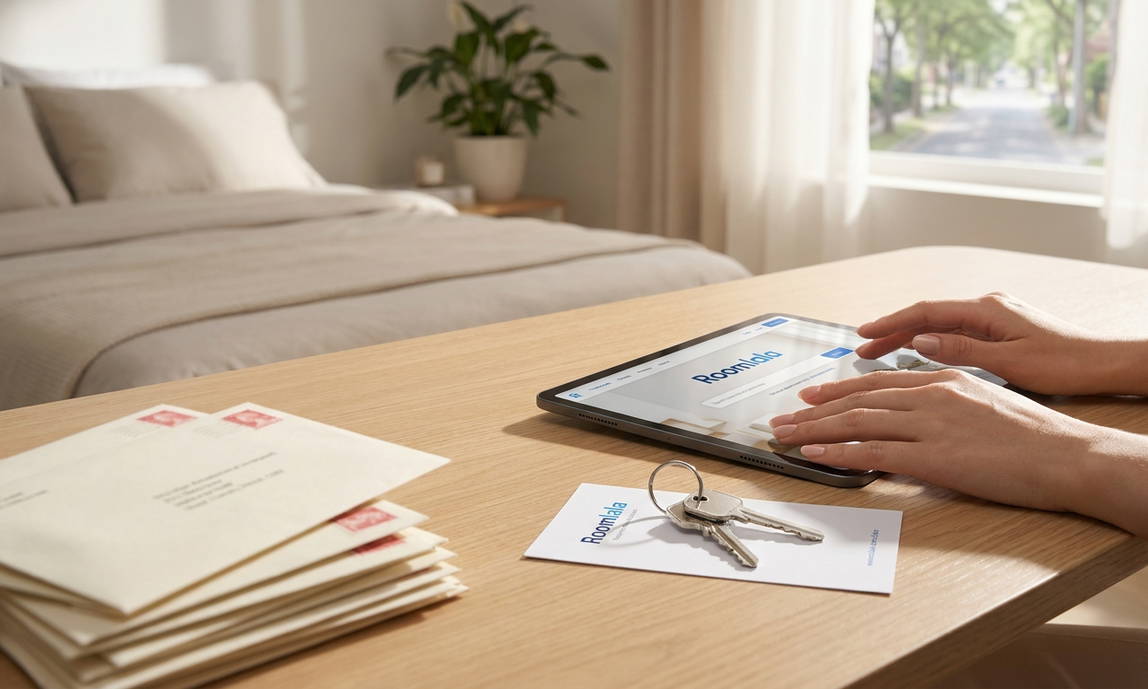
Facing the intensifying housing crisis, French tax legislation is tightening significantly for owners of unoccupied or underutilised properties. With the 2026 housing tax surcharge coming into effect, keeping a second home empty for most of the year or having a vacant property is becoming a major financial drain. At Roomlala, we know how much these new charges can weigh on your family budget or property profitability.
Fortunately, there are legal, community-focused, and highly advantageous solutions to counter this tax pressure. Renting out part of your home on a long-term basis, whether via a student lease or a mobility lease, not only allows you to avoid these penalties but also to generate tax-free income. In this article, we break down the new 2026 legal framework for you and explain how renting a homestay room can turn your taxes into guaranteed income.
See also: CIN regulations in Italy: Why long-term room rentals are appealing to hosts in late 2026, 2027 Finance Bill and furnished rentals: What hosts need to know this autumn and 2026 Housing Act: What changes for room rentals in Spain
Understanding the 2026 housing tax surcharge and tax pressure
The year 2026 marks a decisive turning point in French local taxation. Following Decree No. 2025-1267 of 22 December 2025, more than 3,600 municipalities are now classified as "tense zones". This classification is not just an administrative label: it allows these municipalities to apply a massive surcharge on second homes. This surcharge on housing tax for second homes (THRS) can now reach up to 60%, depending on municipal council votes. For an owner, the year-end bill can therefore soar by several hundred, or even thousands, of euros.
But that is not all. The legislator has also decided to tackle totally unoccupied homes head-on. The 2026 Finance Act enacted the merger of the tax on vacant homes (TLV) and the housing tax on vacant homes (THLV). As of 1 January 2027, these two taxes will merge into a single tax (the TVLH), the rates of which will be further increased. The government's objective is clear: to force the return to the market of unused square metres to house students and workers.
Be careful, a crucial point of vigilance is required here: many owners think they can offset these taxes by doing short-term seasonal rentals (like Airbnb). This is a strategic error. Short-term tourist rental does not change the tax nature of your property. Since the accommodation does not constitute the main residence of your transient tenants, you remain liable for the housing tax surcharge and the tax on vacant homes. To free yourself from these charges, the only solution is to turn to long-term rental.
Making a second home or a vacant property profitable with long-term rental
To cancel liability for the THRS or TLV, the golden rule is simple: your property, or a significant part of it, must become the main residence of a tenant. At Roomlala, we support you in setting up contracts perfectly adapted to this objective without locking you into 3-year terms as a classic unfurnished lease would.
The student lease: a win-win solution
The student lease is a furnished rental contract with a duration reduced to 9 months, corresponding exactly to the academic year. It is the perfect tool for making a second home profitable if you would like to have it back in the summer for your own holidays. By renting your property to a student from September to May, you offer them a roof in a context of housing shortages, while legally qualifying your property as the "tenant's main residence" during this period.
This requalification is magical from a tax perspective: it automatically exempts you from the surcharge on second homes. In addition, students are generally supported by solid guarantors (parents) or by the state's Visale guarantee. This is a very reassuring tenant profile. Take the example of Martine, who owns an apartment in Montpellier (a city in a tense zone). By opting for a 9-month student lease, she saved 850 euros in housing tax surcharges while collecting regular rent, before enjoying her property in July and August.
The mobility lease: flexibility and tax advantages
If the 9-month duration does not suit you, the mobility lease is an extremely flexible alternative. Created for people in professional mobility (interns, apprentices, temporary workers, people in training), this furnished rental contract can last from 1 to 10 months and is non-renewable. Just like the student lease, it confers the status of main residence to the temporary tenant, thus protecting you from the wrath of the 2026 tax surcharge.
The great advantage of the mobility lease lies in its flexibility. You can perfectly well rent a room in your main home or your second home for a period of 3 months to an engineer on assignment, then for 5 months to a temporary nurse. Although it prohibits asking for a security deposit from the tenant, this lease is systematically eligible for the Visale guarantee, which covers unpaid rent and potential damage. It is an excellent way to make your property profitable at your own pace.
Renting a homestay room: tax and exemptions in 2026
In addition to avoiding local surcharges, renting out part of your own main residence offers an exceptional tax niche. If you have one or more unoccupied rooms at home (the "empty nest" syndrome after the children have left, for example), legislation strongly encourages you to rent them out.
The extended income tax exemption
In accordance with Article 35 bis of the General Tax Code, income from renting a furnished room within your main residence benefits from total income tax exemption. Facing the housing crisis, the government has wisely extended this highly incentive-based measure until 31 December 2026. This means that the rent received will not increase your taxable base, a considerable net advantage compared to a classic rental investment.
However, we draw your attention to strict points of vigilance to benefit from this exemption. Firstly, the rented room must be an integral part of your main residence. Separate outbuildings with independent access (such as a studio set up at the bottom of the garden or a converted garage) are excluded from this measure and are subject to the classic LMNP (Non-Professional Furnished Rental) taxation. Secondly, the room must meet decency standards, which implies a minimum surface area of 9 square metres and a window facing the outside.
The rent caps to respect in 2026
For this total tax exemption to apply, the legislator requires that the requested rent remains "reasonable". The tax administration sets annual rent caps excluding charges not to be exceeded each year. For the year 2026, these caps have been re-evaluated to take inflation into account.
- In Île-de-France: the cap is set at 215 euros per square metre per year.
- In other regions (Province): the cap is 159 euros per square metre per year.
Let's take a concrete use case to understand well. If you live in Lyon (Province) and you rent a 15 m2 furnished room within your apartment, the annual rent excluding charges must not exceed 2,385 euros (15 x 159), or about 198 euros per month. If you respect this cap, this income will be 100% tax-free. If you decide to charge more, which is perfectly legal, you will simply lose the total exemption and your income will switch to the classic micro-BIC regime, which remains advantageous thanks to its 50% fixed deduction.
How Roomlala supports you in this legal transition
Navigating through tax reforms, tax surcharges, and different types of leases can seem intimidating. At Roomlala, our mission is to simplify all these procedures to allow you to welcome tenants with complete peace of mind. We provide you with a secure platform designed specifically for homestay rentals and medium to long-term leases.
When you post a listing on our site, you gain access to a community of thousands of students and young professionals whose profiles are verified. We provide you with contract templates updated with the latest 2026 regulations, whether for a student lease, a mobility lease, or an intergenerational cohabitation contract. You don't have to play the part of a lawyer: everything is thought out to secure your process from A to Z.
Moreover, our secure online payment system ensures that you will receive your rent on time, without having to manage reminders. Facing the 2026 housing tax surcharge, don't let your empty rooms become a financial burden. Join the thousands of Roomlala hosts who have already made the choice of long-term rental: you will offset your charges, increase your purchasing power, and enjoy an enriching human experience by helping someone find a place to stay.
", "detectedSourceLanguage": "FR"}


There are no comments yet.
Add a comment
You must log in to post a comment.