
 SEARCH
 LIST YOUR PROPERTY

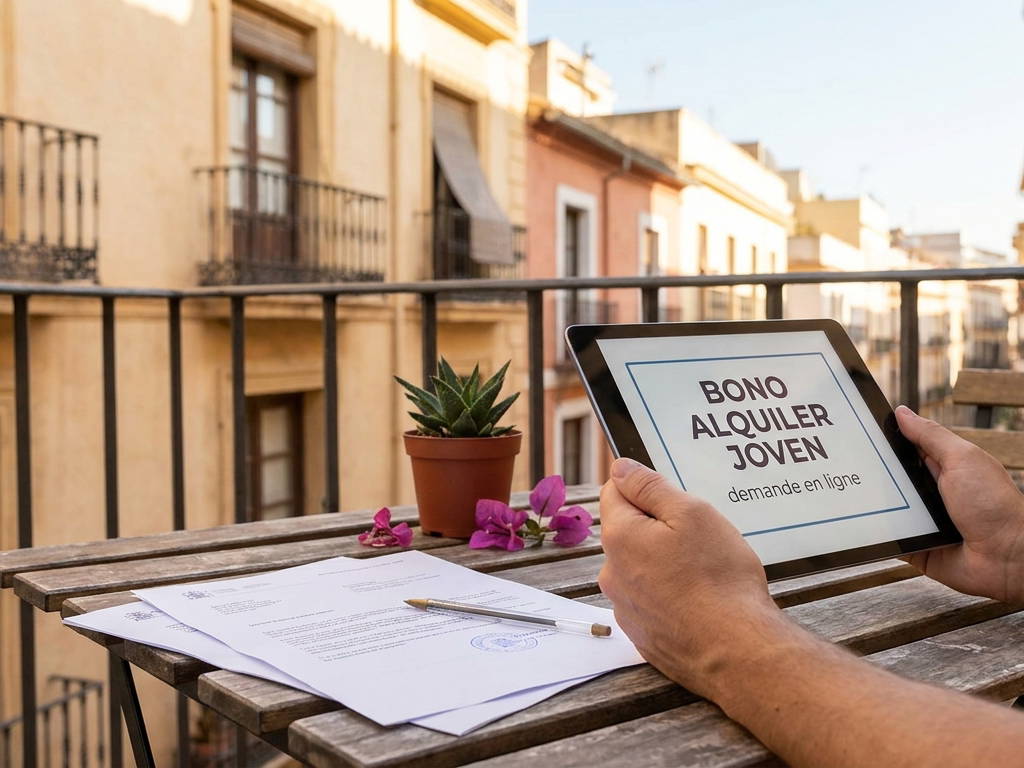
Faced with the continuous rise in rents in major Spanish cities such as Madrid, Barcelona, or Valencia, finding affordable housing has become a real struggle for young people and students. Fortunately, for the start of the 2026 autumn term, the Spanish government has decided to maintain and adapt its flagship support scheme: the Bono Alquiler Joven 2026. At Roomlala, we know how stressful housing budgets can be when you are moving abroad or leaving the family nest. That is why we have broken down the new measures of the Plan Estatal de Vivienda 2026-2030 for you. Whether you are looking to rent a homestay or join a shared housing arrangement, find out how this Spain housing benefit can ease your rent and what the exact steps are to claim it with peace of mind.
What is the new Bono Alquiler Joven 2026?
The Bono Alquiler Joven is a state grant designed to facilitate the independence of young adults in Spain. Facing the housing crisis, the government approved the new Plan Estatal de Vivienda 2026-2030 in April 2026. This plan extends the existence of this benefit while adapting it to the current realities of the property market, notably by acknowledging the importance of shared housing in Spain as a preferred lifestyle for young people.
See also: Ontario rent increase 2026: Why renting out a room appeals to hosts and Rent controls in 2026: What are the new rules for shared housing?
This benefit is exclusively aimed at young people aged 18 to 35. Its primary objective is to reduce the burden of youth rent in Spain on monthly budgets, thus allowing students and young professionals to be housed with dignity without sacrificing their other essential needs. At Roomlala, we notice that more and more young people are turning to room rentals, and this benefit comes at the perfect time to support this trend.
It is important to note that 2026 is a period of administrative transition. Depending on your autonomous community (CCAA), the old scheme (which offered €250 per month for 24 months for an entire home) and the new plan (which can go up to €300 per month for 48 months for an entire home) may coexist. As the management of funds is decentralised, each region adapts the schedule and payment terms according to its own budget.
For those who choose to rent a student room in Spain, the new plan brings excellent news: the benefit is now specifically calibrated for individual rooms. This means that you no longer need to rent an entire apartment to be eligible, a major step forward for users of platforms like Roomlala where room rentals are king.
Eligibility criteria for a room in shared housing
To benefit from the Bono Alquiler Joven 2026 in the context of shared housing or a homestay, several strict conditions must be met. It is not enough to be under 35; the accommodation and your income must also match the criteria set by law.
Rent caps and benefit amounts
The big 2026 novelty for those in shared housing is the adjustment of the benefit amount. For a room in shared housing, the benefit now amounts to up to €200 per month (compared to a maximum of €300 for renting an entire home). Furthermore, the duration of payment for this benefit has been extended: you can now benefit from it for 48 consecutive months, which easily covers the duration of a standard university cycle.
However, for your room to be eligible, its monthly rent must not exceed €300. Aware that this cap is unrealistic in highly strained cities like Madrid, Barcelona, or Palma de Mallorca, the government allows autonomous communities to raise this cap up to €450 per month for a room. It is therefore crucial to check the specific rules of your region.
Let's take a concrete example: Maria, 23, has just found a room on Roomlala in the Benimaclet neighbourhood in Valencia for €350 per month. With the national cap of €300, she would not be eligible. Fortunately, the Generalitat Valenciana has activated the increase clause for strained zones, setting the regional cap at €400 for a room. Maria can therefore receive her €200 monthly benefit, reducing her net rent to just €150.
This regional flexibility is a godsend, but it requires careful research on your part before signing your contract. Always ensure that the rent indicated on your room lease does not exceed the cap in force in the city where you are moving.
Applicant income conditions
The Bono Alquiler Joven 2026 is not granted without resource conditions. To prove that you need this support while being capable of covering the rest of your expenses, you must justify regular annual income. This can come from an employment contract, a paid internship, or a substantial study grant.
The income cap is generally set at 3 times the IPREM (Indicador Público de Renta de Efectos Múltiples). In 2026, this corresponds to annual income below approximately €25,200. If you earn more than this sum, the state considers that you have the means to fund your accommodation without public subsidy.
Let's imagine the case of Lucas, a 26-year-old engineer in his first job in Seville. His gross annual salary is €22,000. He rents a room in shared housing for €280 per month. Since his income is below the €25,200 cap and his rent respects the €300 limit, Lucas is perfectly eligible to receive the €200 monthly benefit for 48 months.
To justify this income, you will need to provide your latest payslips, your Spanish tax return (the Renta), or any official document proving your income. At Roomlala, we always advise our tenants to prepare a complete digital file with these documents well before applications open, so as not to waste time.
Administrative procedures: How to secure your application?
The Spanish administration can sometimes seem complex, especially for expatriates or foreign students. However, with good preparation, obtaining the Bono Alquiler Joven 2026 is quite achievable. Here are the crucial steps we draw your attention to.
The lease agreement and empadronamiento
The golden rule for obtaining this benefit is legal transparency. You must mandatorily appear on the lease agreement. If you are renting a room, the contract must clearly specify that it is the rental of that specific room. Informal sublets or verbal agreements automatically exclude you from the scheme.
Next comes the essential step of the empadronamiento (municipal registration). You must be officially registered at the town hall (Ayuntamiento) as residing at the address of your shared housing. This document proves that the accommodation for which you are requesting the benefit is indeed your habitual and permanent residence.
Let's take the example of Sophie, a French student in Madrid. Last year, she signed a proper lease, but forgot to register her address in time. Result: her application for the Bono Alquiler Joven was rejected. To avoid this, as soon as you sign your room contract via Roomlala, book an appointment at the town hall to obtain your empadronamiento certificate.
Here are the documents generally required to build your file:
- A copy of your ID (DNI or NIE for foreigners).
- The lease agreement in your name, signed by the host.
- The historical and collective empadronamiento certificate.
- Proof of income (employment contract, payslips, tax return).
- A Spanish bank account statement (IBAN) for the benefit payment.
The "first come, first served" rule
This is the major point of vigilance for this Spain housing benefit. As management is decentralised, each autonomous community opens its own application window (convocatoria). The benefit is awarded in the order in which complete files are submitted, until the budget allocated to the region is exhausted.
This requires absolute responsiveness. As soon as the virtual offices for your region open, you must submit your file. If you wait a few weeks, it is very likely that regional funds will already be exhausted, even if you meet all eligibility conditions.
To be ready on the day, we highly recommend that you obtain your Certificado Digital in advance or sign up to the Cl@ve system. These Spanish electronic signature tools are essential for submitting your application online quickly and securely.
Stay informed by regularly checking the official website of your autonomous community or the Ministerio de Vivienda y Agenda Urbana portal. Set alerts and prepare all your PDFs in a folder on your computer.
Shared housing in Spain: Why is it the ideal solution in 2026?
Even with the support of the Bono Alquiler Joven 2026, renting an entire apartment alone remains an unaffordable luxury for many young people. That is why shared housing in Spain and homestays stand out as the smartest and most economical solutions for this start of the term.
Financially, sharing accommodation allows you to divide not only the rent, but also all ancillary costs: electricity, gas, internet, and sometimes even shared groceries. With a room capped at €300 or €450 and a benefit of €200 per month, your remaining housing costs become minimal, allowing you to fully enjoy life in Spain or save money.
On a human level, shared housing is an enriching experience. For an international student or a young expatriate professional, it is the best way to integrate quickly, practice the Spanish language daily, and build a network of local friends. Renting a homestay also offers a reassuring and welcoming setting, ideal for a first experience away from home.
At Roomlala, we are committed to offering you verified room rental listings, with hosts ready to provide you with proper lease agreements. We thus simplify your administrative procedures so that you can claim your Bono Alquiler Joven without a hitch. Do not wait any longer, explore our room offers in Spain and prepare for your 2026 term with peace of mind!



There are no comments yet.
Add a comment
You must log in to post a comment.