
 SEARCH
 LIST YOUR PROPERTY
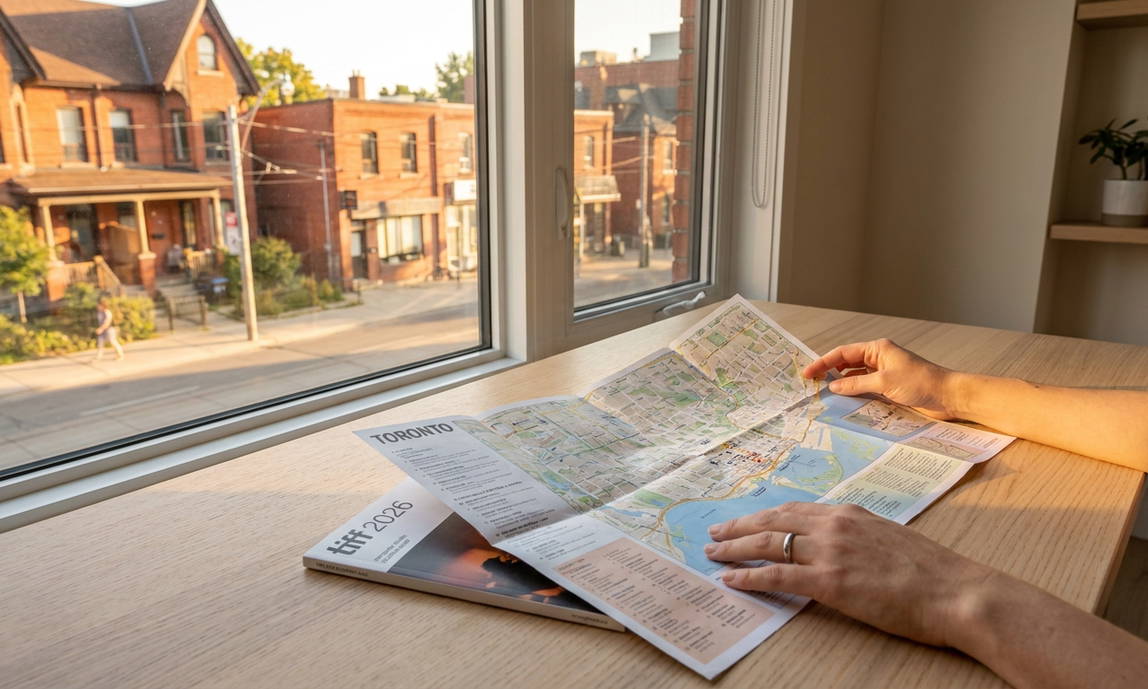
Dreaming of walking the red carpet, attending world premieres, and bumping into your favourite actors around the corner? The Toronto International Film Festival is the unmissable event of the year for any self-respecting film buff. However, organising your trip for this global event can quickly become a financial headache, particularly when it comes to accommodation. At Roomlala, we know how crucial it is to find a comfortable base without sacrificing your budget. That is why we are offering this complete guide to finding the best accommodation in Toronto for TIFF 2026, by opting for a solution that is as budget-friendly as it is authentic: a homestay.
TIFF 2026: Why the accommodation market is exploding in Toronto
The Toronto International Film Festival (TIFF) is not just a cultural event; it is a true global institution. For its 51st edition, which will be held from 10 to 20 September 2026, the Canadian metropolis is once again preparing to roll out the red carpet. During these ten days of excitement, the city transforms into a huge open-air cinema, attracting industry professionals, Hollywood stars, and enthusiasts from all over the world.
See also: Pukkelpop 2026: The best way to find accommodation in Hasselt without using the campsite, Street Parade Zurich 2026: The best way to find affordable accommodation and MEO Sudoeste 2026 Accommodation: The homestay alternative in Zambujeira do Mar
The figures speak for themselves: the festival attracts over 400,000 visitors each year. This massive influx of tourists has a direct and immediate impact on the city's infrastructure. The Entertainment District, the beating heart of the festival, sees its streets packed and its establishments besieged. Faced with this colossal demand, traditional hotel supply reaches saturation very quickly, creating unprecedented pressure on the short-term rental market.
The logical consequence of this saturation: prices skyrocket. From September, it is not uncommon to see hotel room rates double or even triple. For the average film lover, finding cheap accommodation in Toronto becomes a challenge. Downtown hotels are booked out months in advance, and the few remaining rooms are offered at prohibitive rates that can wipe out almost an entire travel budget.
It is precisely in this context of frenzy that looking for an alternative becomes essential. To fully enjoy the Toronto film festival without breaking the bank, you need to think outside the box. At Roomlala, we are convinced that the solution lies in the sharing economy, an approach that not only protects your wallet but also enriches your travel experience in a human and warm way.
Homestay in Toronto: the secret to budget-friendly accommodation
Substantial savings to enjoy the festival
The main argument in favour of a homestay in Toronto is undoubtedly financial. During TIFF 2026, a night in a standard downtown hotel can easily cost you between 400 and 700 Canadian dollars (CAD). By contrast, renting a private room from a local can generally be negotiated between 80 and 150 CAD per night, even during peak periods. The difference is striking, and the maths is simple.
By opting for this cheap accommodation in Toronto, you make considerable savings over the total duration of your stay. Imagine saving 300 CAD per night on a five-day stay: that is 1,500 CAD that stays in your pocket. This saved money can be wisely reinvested where it really counts: buying passes for screenings, tickets for gala evenings, or discovering Toronto's rich culinary scene.
Furthermore, renting a homestay offers a major practical advantage: access to common areas, including the kitchen. Eating out at restaurants for lunch and dinner for ten days can weigh very heavily on a budget. By having the possibility to prepare your own breakfasts or cook a quick meal between two film screenings, you can control your daily expenses even better.
Let's take a concrete example: a travelling couple decides to rent a room in the The Annex neighbourhood via Roomlala. Not only do they pay for their night’s stay at a third of the cost of a hotel, but by preparing their own meals in the morning and packing snacks, they save about 50 CAD per day in restaurant costs. This is the very essence of the smart, budget-friendly travel that we promote.
Authentic Canadian experience
Beyond the strictly financial aspect, choosing a homestay in Toronto means opting for a total immersion in the local culture. Canada is world-renowned for the hospitality and warmth of its people. By staying with a Torontonian, you are not just renting a bed; you are meeting someone who knows their city like the back of their hand and is often delighted to share its secrets.
Your host will be your best ally in navigating the buzz of the Toronto film festival. They can point you to the best routes to reach the TIFF Bell Lightbox while avoiding road closures (like King Street, which becomes pedestrianised during the event), or advise you on using the public transport network (the TTC). These precious insider tips will save you a lot of time and spare you many headaches.
It is also an opportunity to discover less touristy but equally vibrant neighbourhoods. Staying in Kensington Market, Leslieville, or Roncesvalles will allow you to live at the locals' pace, far from the sometimes stifling bustle of the city centre. You will discover independent cafes, vintage thrift stores, and local parks that you would never have explored if you had remained confined to a hotel in the business district.
Here at Roomlala, we firmly believe that human connections are the spice of travel. Discussing the latest film you saw over a morning coffee with your host, chatting about cultural differences, or simply receiving a welcoming smile after a long day of screenings is what will turn your stay at TIFF 2026 into a truly unforgettable experience.
Regulations and peace of mind: choosing your Toronto accommodation wisely
Understanding Toronto's law on short-term rentals
In Toronto, the legislation governing short-term rentals is strict, but it offers a major advantage for our model. Indeed, renting a room in a home (considered a partial rental) is perfectly legal and encouraged. The legal nuance lies in the fact that the strict cap of 180 nights per year applies only to the rental of entire homes. By opting for a private room, you are not affected by this restriction, which guarantees greater availability of listings.
However, the City of Toronto’s local regulations impose specific rules on hosts. The essential condition is that the room being rented must strictly be part of the host's principal residence. Toronto authorities have put this measure in place to fight the housing crisis. Consequently, second homes or pure rental investments are strictly prohibited for short-term rental.
To enforce this law, the municipality has introduced a mandatory registration system. Any host who offers a rental for a duration of less than 28 consecutive days must register with the city's services. Once this process is completed, the host receives an official registration number that they must keep and use for any communication.
This registration number is not just an administrative detail: it must be displayed in a visible manner on the online listing. At Roomlala, we support our hosts in complying with these requirements, thus guaranteeing our guests an experience that is fully legal and free of administrative hitches.
Points of vigilance for a stress-free booking
As a traveller looking for accommodation in Toronto, your first instinct should be verification. Before confirming your booking, always ensure that the City of Toronto’s official registration number is present on the host's listing. This simple visual check is your best insurance against disappointment and guarantees that the accommodation is compliant.
Why is this check so crucial? Because the City of Toronto carries out regular checks and actively hunts down illegal listings. If you book unregistered accommodation, you run a high risk of last-minute cancellation, as the listing could be removed by the authorities just before your arrival at the Toronto film festival. During TIFF, finding accommodation at the last minute is almost mission impossible.
Another important financial point to anticipate is the application of the Municipal Accommodation Tax (MAT). This tax applies to all short-term stays in Toronto and is added to the initial price of the nightly rate. It is essential to include it in your overall budget calculation to avoid any nasty surprises at the moment of final payment.
Finally, by going through a secure platform like Roomlala, you benefit from a solid framework of trust. We advise you to always communicate via our internal messaging system and to never accept payments outside the platform. This guarantees not only the security of your funds but also a responsive customer support team should you need it during your Canadian stay.
Our final tips for organising your stay at TIFF 2026
Anticipation is the absolute key to success for your trip to TIFF 2026. The official schedule for the festival's screenings is traditionally published in August. At that precise moment, demand for affordable accommodation experiences an immediate and meteoric peak. Film buffs from all over the world rush to booking platforms as soon as they have confirmed their cinema tickets.
To get ahead of this wave, we highly recommend that you book your homestay in Toronto well before the programme is released, ideally from the start of the summer. By booking early, you will have access to a much wider choice of quality accommodation, in the best neighbourhoods, at the most competitive rates. Once your base camp is secured, you will be able to focus calmly on selecting your films.
Regarding logistics, prepare your travel in advance. Toronto's public transport network (TTC) is very extensive. As soon as you arrive, get a PRESTO card, which is essential for travelling by subway, streetcar, and bus. If you are staying a bit further from the Entertainment District to save money, ensure your accommodation is located near a subway line (such as Line 1 Yonge-University or Line 2 Bloor-Danforth) to reach the cinemas quickly.
Finally, keep in mind that September in Toronto generally offers very pleasant weather, but evenings can be chilly, especially when you are queuing outside for a midnight screening. Pack comfortable, layered clothing. With well-chosen cheap accommodation in Toronto via Roomlala, a controlled budget, and flawless organisation, you are now ready to experience the magic of TIFF 2026 under the best possible conditions. Enjoy the festival!







There are no comments yet.
Add a comment
You must log in to post a comment.