
 SEARCH
 LIST YOUR PROPERTY
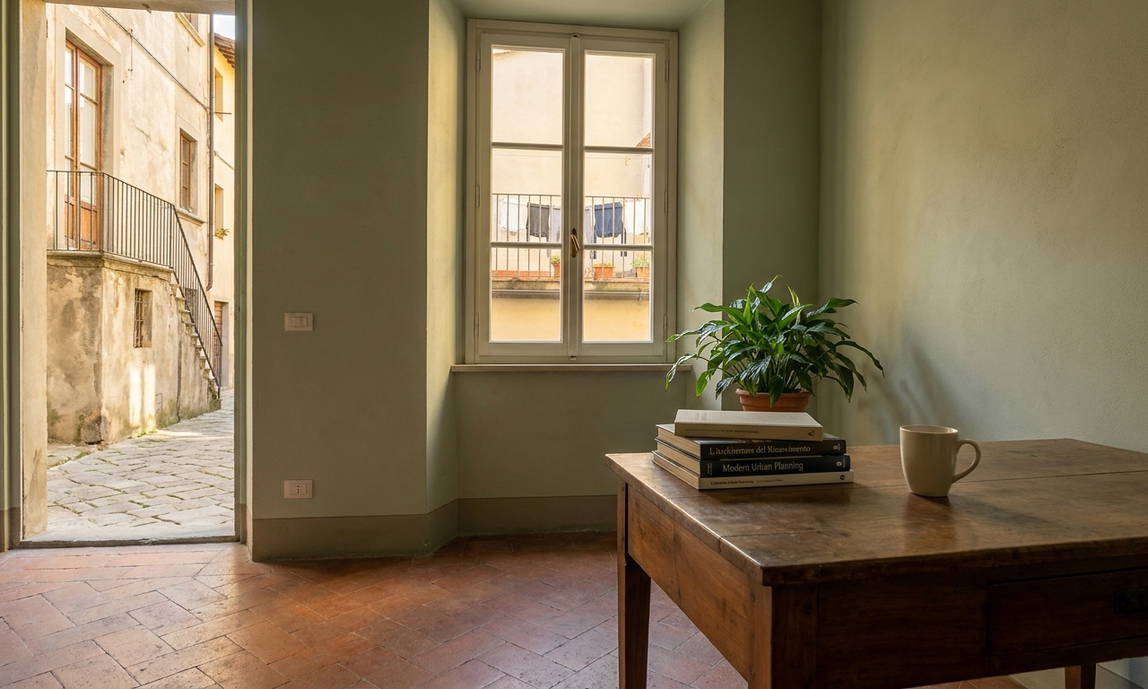
Italy has always been a dream destination for travellers from all over the world, but for property owners, 2026 marks a real turning point. At Roomlala, we are observing a profound shift in the rental market on the peninsula. Faced with over-tourism and the housing crisis affecting locals, Italian municipalities have decided to crack down. Short-term rentals, once seen as a real goldmine, are now subject to unprecedentedly strict rules.
Whether you own an apartment with a view of the Ponte Vecchio or a spare room near St. Mark's Square, the situation has changed. The new Florence rental regulations and the 2026 Venice housing law are completely redrawing profitability strategies. Administrative, tax, and logistical constraints are piling up to the point of discouraging even the most motivated hosts. Fines for non-compliance have become a real deterrent, and the daily management of a tourist property is now akin to an obstacle course.
See also: Regulation of 2026 short-term rentals in Spain: The guide for hosts, Canada rental laws 2026: Why long-term room rentals are a must over Airbnb and Residential tenancy reform in Wallonia (Autumn 2026): New benefits for shared housing
It is within this complex context that many owners are turning to a solution that is both more peaceful and equally profitable: long-term rentals, particularly renting rooms to students or young professionals. In this detailed article, we will decode the recent restrictions imposed by major Italian cities for you and demonstrate why renting a room for several months has become the best Airbnb Italy alternative. Get ready to rethink your property investment with peace of mind.
Understanding the new 2026 rental regulations in Florence and Venice
Italian historic centres are suffocating under the weight of mass tourism. To bring their neighbourhoods back to life and allow residents to find housing, mayors have taken drastic measures. It is crucial to fully understand these local regulations, which differ from city to city but share a common goal: to drastically limit short-term rentals.
Florence: the expansion of the ban and the end of key boxes
Florence's rental regulations reached a new milestone in June 2026. To avoid the spillover effect that was pushing investors to buy just outside the city centre, the municipality has extended the ban on new short-term rental permits beyond the historic centre, now encompassing zones A3 and A4. This strong measure, recently validated by the Regional Administrative Court (TAR) of Tuscany, means in practice that it has become almost impossible to obtain a new licence for tourist rentals in these highly sought-after areas.
But that's not all. Florence has also declared war on the famous key boxes. Once hung by the dozen on the grilles of Florentine palaces, they are now strictly forbidden in the city centre. This ban forces owners to ensure a physical welcome for every traveller, which significantly increases daily management. No more self-check-ins at midnight: you must be present, or pay for an expensive concierge service that will eat into your profit margin.
Let's take a concrete example: an owner located in the San Frediano district (zone A3) who wanted to turn their apartment into a seasonal rental in 2026 is now being refused authorisation. If they decide to rent illegally, they face major financial penalties. For them, the only legal and viable option is to turn to longer leases, thereby escaping this municipal ban while ensuring a regular income without having to run around handing over keys every weekend.
The 2026 Venice housing law: the 120-day cap
In Venice, the situation is just as tense. The 'Serenissima', threatened by the exodus of its inhabitants, has implemented the famous 2026 Venice housing law. This regulation imposes extremely strong constraints on owners. The flagship measure is the introduction of a strict 120-day cap per year for basic tourist rentals. In other words, your property can only be rented on short-term platforms for a maximum of one-third of the year.
This 120-day limit literally destroys the business model of many investors. What do you do with your property for the remaining 245 days? Leaving it empty incurs costs (condominium fees, taxes, maintenance) without any income. The annual return on standard platforms collapses. Furthermore, the Venetian municipality carries out rigorous cross-checks with data from booking platforms to track violations, making any fraud impossible.
Imagine you own a beautiful independent room in the Cannaregio district. With the 120-day limit, your annual income is capped. However, if you choose to rent that same room to a student from Ca' Foscari University for a period of 10 months, you bypass this tourist restriction. You thus maximise your occupancy rate over the entire year, while actively participating in the revitalisation of the Venetian social fabric.
The Italian national framework: CIN, Partita IVA, and safety
Beyond the local restrictions specific to each municipality, the Italian government has also tightened the screws at a national level. At Roomlala, we want to warn you about these new obligations that transform short-term rental into a genuine professional activity, with all the administrative constraints that implies.
The mandatory CIN and the Partita IVA threshold
Since 2026, the Italian state has made it strictly mandatory to obtain and display the CIN (Codice Identificativo Nazionale) for all tourist rentals. This code, issued by the Ministry of Tourism, must appear on all your online listings, under penalty of severe fines. The goal is to fight the shadow economy and ensure perfect traceability of rental income. Obtaining this CIN requires filling out multiple forms and proving the compliance of your accommodation.
Even more impactful: the new tax rule regarding multiple management. From now on, managing three or more properties as short-term rentals automatically requires opening a Partita IVA, that is to say, adopting a professional status. This involves paying social security contributions (INPS), maintaining strict accounting, invoicing with VAT, and losing the tax advantages associated with classic wealth management (such as the 'cedolare secca' in certain cases).
For example, a family that inherited three small studios in Rome or Florence and rented them out occasionally on Airbnb suddenly finds themselves reclassified as a business. Accounting and tax costs explode, making the operation much less attractive. By switching to long-term rentals in Italy, these same owners can maintain their status as private landlords, avoid opening a Partita IVA, and continue to benefit from simplified taxation.
Increasingly strict safety standards
Tourist rentals in Italy are now subject to safety standards worthy of professional hospitality. In 2026, the law made the installation of combustible gas and carbon monoxide detectors mandatory in all accommodation rented by the night. Additionally, the presence of portable fire extinguishers, regularly serviced by approved professionals, has become an unavoidable legal obligation.
These upgrades have a significant cost and require constant maintenance. If a detector breaks or if the extinguisher's expiry date is passed during an inspection, the owner risks administrative closure of their listing and heavy financial penalties. These logistical constraints are added to the management of cleaning, laundry, and communication with ever more demanding travellers.
By choosing to rent a room in a homestay for stays of several months, the regulatory framework is much more flexible. Although the safety of your tenants remains a top priority, you are not subject to the same nit-picky inspections and material obligations as hotel or para-hotel structures. You are renting living space in your primary or secondary residence with standard housing regulations, which considerably lightens your mental load.
Why long-term rental in Italy is the best alternative
Faced with this avalanche of restrictions, many owners feel helpless. However, a particularly advantageous solution is available to them. At Roomlala, we are convinced that the transition to medium and long-term stays is the key to sustaining your property income in Italy while regaining a real quality of life.
Financial stability and peace of mind
The main advantage of long-term rentals in Italy lies in stability. Gone is the stress of empty calendars in the low season, last-minute cancellations, or price wars against fierce competition. By renting your room by the month or by the year, you ensure a fixed and guaranteed income over a long period. Your budget is predictable, which is ideal for paying off a mortgage or anticipating renovation work.
Moreover, daily management is radically simplified. Renting a room to a young professional or student means the end of incessant check-ins and check-outs. You no longer have to manage cleaning the room every three days, nor wash bed sheets at a frantic pace. The tenant makes the space their own, maintains their living area, and becomes a real housemate. It is an invaluable time-saver for owners who have a busy professional or family life.
Let's take the case of an owner in Milan who spent an average of 15 hours a week managing her listings, answering messages, welcoming tourists, and cleaning. By deciding to rent her guest room to a young nurse on a fixed-term contract for 12 months, she got her weekends back. Her monthly income is slightly lower than the nightly rate in high season, but smoothed over the year, with zero rental vacancies and zero cleaning costs, her net profitability is actually higher.
Renting a student room in Italy: the transitory contract explained
To rent a student room in Italy or host temporary workers legally, Italian law offers a fantastic tool: the transitory contract (contratto transitorio). This type of lease, with a duration ranging from 1 to 18 months, is specifically designed to meet temporary housing needs. It allows you to completely bypass tourist restrictions (such as the Florentine ban or the 120-day Venetian cap) since it is residential and not tourist rental.
However, it is important to note one point of caution: to establish a transitory contract, the law requires precise supporting documents. The tenant must prove the temporary nature of their stay (school enrolment certificate, fixed-term employment contract, internship). Furthermore, in municipalities with more than 10,000 inhabitants (such as Florence, Venice, Rome, or Milan), this contract must often respect rent caps, known as 'canone concordato', set by local agreements. In exchange for this capped rent, the owner benefits from ultra-advantageous taxation via the 'cedolare secca' at a reduced rate (generally 10% instead of 21%).
Imagine you are hosting an international student who has come to study design in Florence for an academic year. With a transitory contract for students (contratto transitorio per studenti universitari), you perfectly meet their housing need while securing your legal situation. You benefit from reduced taxation on your rental income, you help a young person settle into the city, and you protect yourself from the municipality's wrath. It is a win-win system par excellence.
How Roomlala supports you in this transition
Changing your rental model can seem intimidating, especially when you are used to tourist platforms. At Roomlala, we have designed our platform to make this transition as easy as possible. We connect owners with spare rooms to a qualified community of tenants looking for stays of one month or more. Our intuitive interface allows you to publish your listing in just a few clicks and precisely target the type of profile you wish to host, whether it be a quiet student or a dynamic young professional.
Security and trust are at the heart of our approach. Unlike passing tourists, our users are looking for a real place to live. We verify the profiles of our members to guarantee you serious tenants. You have the ability to chat with them at length via our secure messaging system before accepting a booking. You can thus ensure your lifestyles are compatible, request the necessary documents to draw up your transitory contract, and organise a virtual or physical meeting.
We know that Italian regulations, especially the calculation of the 'canone concordato', can seem complex. Although Roomlala does not replace a legal or tax advisor, our platform offers you the flexibility necessary to adapt your rates according to your municipality's requirements. You keep total control over the accepted duration of the stay, the amount of the rent, and the house rules. By joining our community of hosts, you are opting for management that is human, respectful of local laws, and deeply rooted in the sharing economy.
In conclusion, 2026 marks the end of the golden age of deregulated tourist rentals in Italy. The cities of Florence and Venice are leading the way in regaining control through public authorities, making Airbnb-type rentals increasingly restrictive. Faced with Florence's rental regulations, the national CIN, and the 2026 Venice housing law, the best strategy for owners is adaptation. Renting a room long-term with Roomlala is no longer just an Airbnb Italy alternative: it has become the most intelligent, safe, and ethical choice to enhance your property assets while avoiding administrative hassles.





There are no comments yet.
Add a comment
You must log in to post a comment.