
 SEARCH
 LIST YOUR PROPERTY
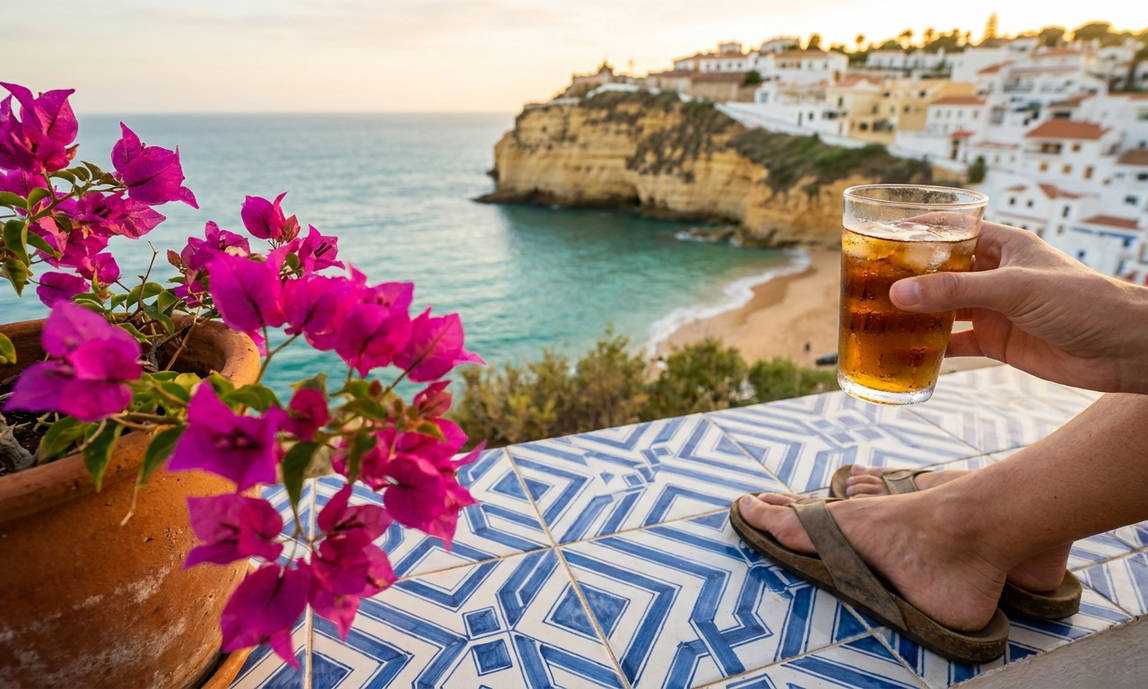
Dreaming of extending your summer under the brilliant sun of southern Portugal, far from the gloom that slowly settles elsewhere in Europe? The Algarve in September 2026 is an absolute no-brainer. With its golden cliffs, crystal-clear waters, and exceptionally mild climate, this region continues to attract travellers in search of an escape. At Roomlala, we know just how magical this time of year is for discovering the Portuguese coastline. However, a major obstacle often stands in the way of holidaymakers: the budget. Indeed, the constant popularity of this destination keeps enormous price pressure on traditional accommodation. Hotel inflation shows no signs of slowing down, and finding affordable lodging can sometimes feel like an uphill battle. Fortunately, there are alternative and authentic solutions for enjoying an unforgettable holiday without sacrificing all your savings. In this article, we reveal all our tips for making the most of the Algarve in September 2026, by highlighting the undeniable advantages of homestay rentals.
Why the Algarve in September 2026 remains the ideal, yet expensive, destination
September in the Algarve is no longer a low season. Quite the contrary, it is now firmly considered a peak season in terms of both tourism and climate. Temperatures hover pleasantly between 25 and 28 degrees, the Atlantic Ocean has had all summer to warm up, and the days remain long and sunny. It is the perfect time for those who wish to avoid the sweltering heat of July and August while still enjoying a true summer atmosphere. This idyllic climate attracts not only European retirees but also young professionals and families without school-aged children, thus creating a consistently high demand for tourism.
See also: August in the Algarve 2026: How to avoid price hikes by choosing a homestay, TIFF 2026: The best way to find accommodation in Toronto and enjoy the film festival without breaking the bank and Brussels Comic Strip Festival 2026: The alternative for a 100% comic-themed weekend and budget-friendly accommodation
However, this unwavering appeal has a direct cost on travellers' wallets. In 2026, we note that the pressure on traditional hotel rates remains extremely high across the entire southern coast. To give you a concrete idea, you often have to shell out more than 200 euros per night on average for a double room in a standard 3-star hotel. These prohibitive prices discourage many travellers who expected to benefit from the traditionally more lenient late-season rates. Hotel complexes are booked out months in advance, and last-minute offers are almost non-existent or overpriced.
Faced with this price surge, the search for low-cost accommodation in Portugal is becoming an absolute priority for keeping your holiday budget under control. It is imperative to rethink how you travel and turn towards alternative accommodation solutions. Savvy travellers have well understood that to enjoy the charms of Faro, Albufeira, or Portimão without breaking the bank, one must step off the beaten track of the traditional hotel industry. This is where new travel trends make perfect sense, combining savings with enriching human experiences.
Take the concrete example of Thomas and Sarah, a young professional couple who decided to spend two weeks in the Algarve in mid-September 2026. By consulting traditional hotel booking platforms, their accommodation budget easily exceeded 2800 euros for fourteen nights. An amount that would have drastically cut into their budget dedicated to activities, restaurants, and car hire. By turning to more local alternatives, they were able to divide this expense by three, making their late-season holiday plans in Portugal not only achievable but also much higher quality on the ground.
Homestays in the Algarve: the economical and authentic alternative
Substantial savings for a controlled budget
Faced with galloping hotel price inflation, renting a homestay room in the Algarve is undoubtedly the major economic alternative for this year 2026. At Roomlala, we see daily how this option allows people to bypass the excessive rates of the south coast. By choosing a room with a private individual, the price per night is often reduced by 50 to 70% compared to a hotel of equivalent comfort. This colossal price difference frees up a considerable budget that you can reinvest in your leisure activities, sea excursions, or discovering local gastronomy.
Beyond the simple price per night, staying with a host offers significant indirect financial benefits. One of the main advantages is shared access to common areas, and particularly the kitchen. Being able to prepare your own meals, even if just breakfast and a few dinners, allows for drastic savings on your restaurant budget. No more obligation to eat out for lunch and dinner: you can wander through local markets, buy fresh regional produce, and cook as if you were at home. It is an intelligent and convivial way to manage your food budget while travelling.
To illustrate this point, let's imagine a one-week holiday. If you save 100 euros per night on accommodation and 30 euros per day by preparing your own breakfasts and picnics, that's a total of more than 900 euros saved in just one week of your stay. A sum that makes all the difference and proves that finding low-cost accommodation in Portugal does not mean giving up comfort or the quality of your holiday. It is simply choosing a smarter way of staying that is better adapted to current economic realities.
Incomparable local immersion for unique memories
Choosing a homestay in the Algarve is not just a sound financial decision; it is also a choice for human connection and authenticity. By staying with locals, you foster a cultural immersion that the anonymity of a hotel room can never offer you. Your hosts are often the best ambassadors for their region. They share their daily lives, their culture, and, most importantly, their valuable recommendations for discovering the Algarve off the beaten track, far from the tourist crowds that persist in September.
At Roomlala, we regularly receive testimonials from travellers enchanted by the wise advice of their hosts. For example, instead of heading towards the very busy Praia da Marinha, your host might point you towards a small secret cove accessible only via a hidden path they have known since childhood. They might also recommend the best 'tasca' (typical small tavern) in the neighbourhood for tasting a real seafood cataplana at an unbeatable price, far from the tourist traps of the seafront.
This human dimension radically transforms the travel experience. You no longer visit the Algarve as a mere passing tourist, but you live it from the inside. Conversations over coffee in the morning, discussions about the history of the region, or learning a few words of Portuguese create lasting memories. The late season is particularly well-suited to these moments of sharing, as the pace slows down slightly compared to the frenzy of August, making locals more available and more inclined to chat with their guests.
Tourist taxes and legislation: what you need to know in 2026
The famous Taxa Turística in the Algarve
When you are planning your late-season holiday in Portugal, there is a budget element that is often forgotten but remains unavoidable in 2026: the municipal tourist tax, known as the 'Taxa Turística'. The majority of popular Algarve municipalities have now adopted this measure to fund the maintenance of their tourist infrastructure. Therefore, if you stay in Albufeira, Portimão, Faro, Loulé, or Lagoa, you will be subject to this local contribution, regardless of your accommodation type, including homestays.
It is crucial to note that in September, this tax is charged at the peak season rate. The scale is generally 2 euros per night per adult (young children are often exempt). To protect long-term holidaymakers, a cap is fortunately set at 7 consecutive nights per stay. Thus, the maximum tax you will pay will amount to 14 euros per adult, even if you stay for fifteen days with the same host. This is an important detail to include in your estimated budget to avoid any nasty surprises upon arrival.
However, there is a major insider tip for budget-conscious travellers: the city of Lagos stands out as a notable exception on the south coast in 2026. Indeed, this magnificent historic city, famous for its Ponta da Piedade cliffs, still applies no tourist tax to its visitors. Staying in a homestay in Lagos therefore represents a double opportunity for savings, all while enjoying one of the most charming and dynamic cities in the western region of the Algarve (the Barlavento).
A point of essential vigilance regarding this tourist tax concerns its payment method. At Roomlala, we inform you that many booking platforms do not automatically collect this tax for Algarve municipalities. The traveller must therefore plan to pay the Taxa Turística directly to the host upon check-in, most often in cash. We recommend you have the exact change ready and ask for a receipt from your host to justify this mandatory payment.
Safety and compliance: the importance of the RNAL number
Short-term rentals in Portugal, known as Alojamento Local (AL), are strictly regulated by law. Recently, Portuguese legislation has been reformed in depth by decrees 76/2024 and 151/2026. These texts aim to regulate the market, guarantee traveller safety, and fight against illegal accommodation. As a tenant, it is your responsibility to ensure that the accommodation you book complies with these legal standards, even if it is just a simple homestay room.
The central element of this regulation is the official registration number, called RNAL (Registo Nacional de Alojamento Local). The law requires any owner renting out a room by the night to be declared with the tourism and municipal authorities. This number certifies that the accommodation meets current safety standards (presence of fire extinguishers, fire blankets, first aid kits) and that the host is operating legally. It is imperative to verify that the host has this RNAL number before finalising your booking.
At Roomlala, we take safety and compliance very seriously. We strongly encourage all our hosts located in Portugal to clearly display their RNAL registration number on their listing. During your communications with a potential host in the Algarve, do not hesitate to ask them to confirm their registration if it is not visible. A host in compliance will be happy to reassure you. By respecting this simple precaution, you ensure yourself a peaceful, secure stay that is perfectly in line with local 2026 legislation.
Our practical tips for a successful late-season holiday in Portugal
To get the most out of your stay in the Algarve in September 2026, good preparation is key. First of all, despite opting for a homestay, we strongly advise you to plan your bookings in advance. Demand for this type of authentic and affordable accommodation is exploding, precisely because travellers are fleeing from hotel prices. Booking several months in advance guarantees you have the choice among the best rooms, the best-located ones, and with the warmest hosts, whether in the historic centre of Faro or on the heights of Monchique.
Regarding mobility while there, the Algarve is a region best discovered by car, especially if you wish to explore the isolated beaches of the Vicentine Coast to the west or the picturesque inland villages. However, car rental prices can still be high in September. A tip is to use public transport, such as the regional train (Linha do Algarve) which connects Lagos to Vila Real de Santo António, or the local bus networks (VAMUS Algarve). Your host will also be of great help in explaining how to navigate these networks effectively without breaking the bank.
As for luggage, prepare for a true Indian summer. The days are warm, requiring light clothing, swimsuits, sunscreen, and sunglasses. However, September evenings can sometimes start to cool down, especially if you are staying near the ocean or inland. Remember to tuck a light jumper or a mid-season jacket into your suitcase to comfortably enjoy your dinners on the terrace or your evening walks along the marinas of Vilamoura or Portimão.
Finally, for an optimal itinerary, we suggest not sticking to just one city. Take advantage of the flexibility and advantageous rates of homestay rentals to organise a modest road trip. Spend a few days in Faro for its student atmosphere and proximity to the Ria Formosa natural park, then head towards Lagos for its historic charm and lack of tourist tax, before finishing with an immersion in the wild nature of Cape Saint Vincent. By planning in this way, you will experience a rich, diverse, and, above all, budget-friendly late season in the Algarve.

There are no comments yet.
Add a comment
You must log in to post a comment.