
 SEARCH
 LIST YOUR PROPERTY
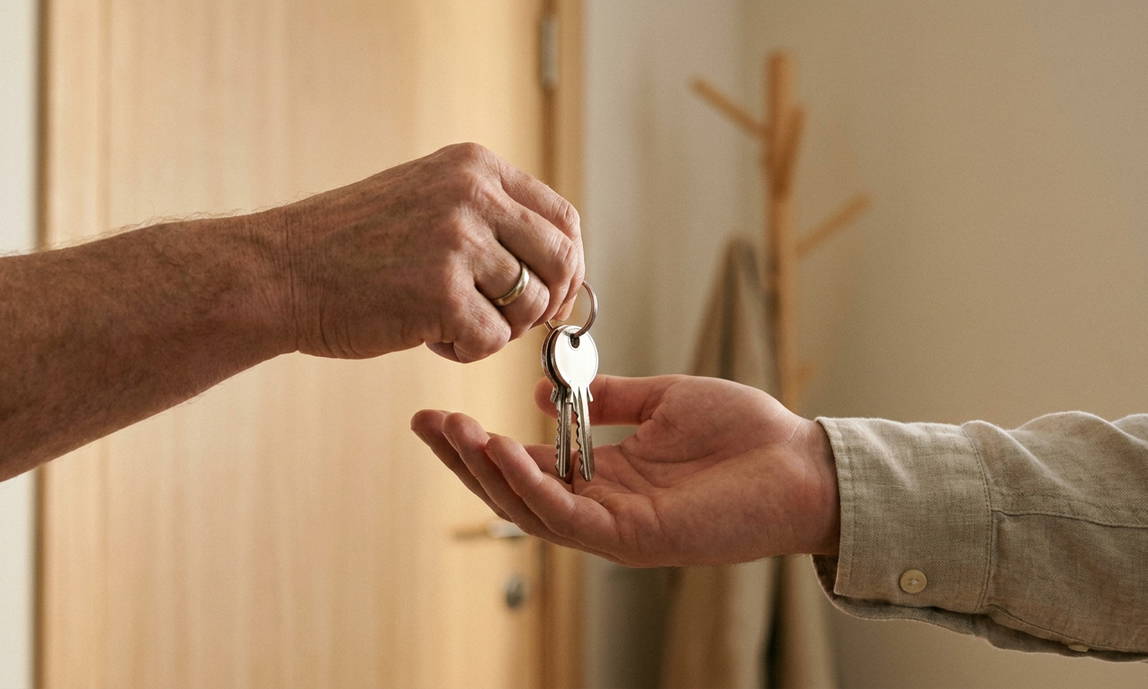
As we approach the 2026 academic year, the search for a place to live is becoming a real uphill battle for thousands of young people in Switzerland. At Roomlala, we are seeing that the search for apprentice housing in Switzerland 2026 has never been more complex. Between soaring rents and a drastically shrinking supply, young professionals and students in vocational training are struggling to find a place to stay. Yet, a simple, human, and financially beneficial solution exists: renting a homestay. By opening your doors, you are not just supplementing your monthly income, you are actively participating in solving a major societal crisis.
Housing shortage in Vaud and Geneva: an unprecedented challenge for the 2026 academic year
The real estate situation in French-speaking Switzerland has reached a critical threshold this year. The figures speak for themselves and illustrate a housing shortage in Vaud and Geneva of unprecedented scale. In the canton of Vaud, no fewer than 9 out of 10 districts are currently experiencing an acute shortage, with an alarming average vacancy rate of 0.94%. The situation is even tighter at the end of the lake, where Geneva is showing a record low of around 0.3%. Finding an apartment is a feat for an established household, and becomes an almost impossible mission for a young person on an apprentice's salary.
See also: Porta 65 Jovem programme in 2026: How to fund your room in a shared housing arrangement in Portugal, Student lease vs. standard furnished lease: Which option should you choose for renting your room for the 2026 academic year? and 2026 student intake in Brussels: Everything you need to know about student leases and shared housing
This scarcity of supply is hitting the younger generation hard. Unlike university students who can sometimes benefit from dedicated residences, apprentices and young workers are often left behind in the open market. Their income, although regular, is not enough to reassure real estate agencies that require strict financial guarantees. As a result, many young people find themselves forced to accept exhausting commute times or give up professional opportunities in dynamic but financially inaccessible regions.
Faced with this impasse, the traditional market is no longer able to meet the demand. The construction of new affordable housing takes time and clashes with the urban density of the major French-speaking centers. This is where the collaborative economy and civic mutual aid make perfect sense. At Roomlala, we are convinced that the unused square meters in private homes represent the greatest potential real estate stock to unlock this crisis situation.
Indeed, many Swiss households have a spare guest room or a space vacated by children moving out. Mobilizing these dormant spaces is a direct and immediate response to the crisis. It is an approach that is part of a transition towards a more sustainable way of life, where optimizing what already exists takes precedence over new construction, while recreating intergenerational social ties.
Renting a room in your own home in French-speaking Switzerland: a truly win-win solution
The supportive and human impact for the apprentice
Choosing to rent out a room in your home in French-speaking Switzerland goes far beyond a simple real estate transaction. For an apprentice, it is the assurance of a stable and supportive environment for successful professional integration. Entering the workforce is a stressful period of transition. Living in a homestay offers a reassuring framework, often quieter than a typical shared housing situation, allowing the young person to focus fully on their training and exams.
Let us take a concrete use case that we often see at Roomlala: Lucas, 17, has landed an apprenticeship as a cabinetmaker in Lausanne, but his family lives in the Vaudois Jura. The daily commutes are exhausting him. By renting a room at Martine's, a retiree in Lausanne, Lucas not only gains two hours of sleep a day, but he also benefits from a warm presence in the evenings. This stability has a direct impact on his professional success and mental well-being.
Furthermore, this form of accommodation promotes rapid integration into the local community. The host can share their tips on the neighborhood, good addresses, and local customs. It is a real stepping stone for the apprentice's independence, as they learn to manage a realistic housing budget while respecting the house rules of an established home.
Financial and personal benefits for the host
For the owner or primary tenant, the benefits are just as tangible. In an economic context where the cost of living and energy bills are rising, renting out an unused room guarantees a regular and significant additional income. This can help cushion rent increases, finance personal projects, or simply maintain a comfortable standard of living as retirement approaches.
Take the example of shared housing for young professionals in Switzerland: Marc, owner of a large apartment in Geneva, saw his children leave the nest. By hosting Sarah, a young nurse at the start of her career, he receives a monthly rent that covers a good portion of his co-ownership charges. In addition, Sarah's presence brings life to the apartment and a sense of security when Marc is away for the weekend.
It is also an enriching human experience. The clash of generations often gives way to beautiful bonds: exchanges on new technologies, sharing meals or common passions. At Roomlala, many hosts tell us that the fight against urban loneliness has become, over the months, the main motivation for their approach, far beyond the initial financial aspect.
The legal framework in 2026: what you need to know to get started with peace of mind
The right to sublet preserved and regulated
If you are a tenant yourself, you are surely wondering if you have the right to sublet a room. The answer is yes! The Swiss legal framework remains very favorable in 2026. Indeed, subletting a room is a right guaranteed by Article 262 of the Code of Obligations. Moreover, the revision of tenancy law that aimed to severely restrict this practice (with a two-year limit and mandatory written agreement) was rejected by the Swiss people during the November 2024 votes. The current system, flexible and proven, therefore remains in effect.
However, strict rules apply. You must inform your primary landlord (agency or owner) and obtain their consent. They can only object for very specific reasons. For example, if you refuse to provide them with the terms of the sublease (identity of the subtenant, rent amount), or if you make an abusive profit at the expense of the apprentice. At Roomlala, we advise you to always play the transparency card: send a registered letter to your agency with the details of the planned sublease agreement.
Be careful, unauthorized subletting without informing the landlord or making a disproportionate profit is valid grounds for early termination of your own lease. It is therefore crucial to do things by the book to protect your housing while helping a young person.
Setting a fair rent and meeting habitability standards
To ensure the approach remains supportive, the rent charged to the apprentice must be strictly proportional to the surface area occupied in relation to the total rent of the housing. You cannot make a profit on the sublease. However, the law allows for a maximum surcharge of 10% to 20% if the room is rented furnished, in order to compensate for the wear and tear of your furniture and equipment (bed, desk, wardrobe, internet access, electricity).
Here is an example calculation: if your total rent (including charges) is 2000 CHF for a 100 m2 apartment, and the apprentice occupies a 15 m2 room while having access to common areas (i.e., usage estimated at 25% of the overall surface area), the base rent of the sublease would be 500 CHF. By adding 15% for furniture and Wi-Fi, the final rent requested from the apprentice will be 575 CHF. An unbeatable rate on the French-speaking market!
Also, be vigilant regarding habitability standards. At the federal level, an individual room must generally be at least 10 m2 to be considered a full room. There are cantonal specifics: in Geneva, for example, an area of 6 to 9 m2 corresponds to a 'half-room'. Ensure that the room offered has a window, sufficient ventilation, and adequate heating to ensure decent comfort for your tenant.
Taxation and practical tips for successful cohabitation
On the tax front, it is essential not to confuse Swiss rules with those of neighboring countries. Unlike France, where total exemptions exist under certain conditions, in Switzerland, there is no automatic exemption for renting a room in a homestay. The income derived from this rental (or sublease) is considered taxable income and must strictly appear in your annual tax return.
However, Swiss taxation allows for this burden to be eased. The landlord has the right to deduct a portion of the operating costs related to this room. In addition, for a room rented furnished, cantonal tax authorities generally accept the application of a flat-rate deduction (often set at 20% of rental income) to compensate for furniture wear and maintenance. We recommend checking the exact rates with the tax administration of your canton (Vaud, Geneva, Neuchâtel, etc.) to optimize your declaration.
To ensure harmonious cohabitation, drafting a clear contract is essential. This document must specify the rent amount, the distribution of charges, the common areas accessible (kitchen, bathroom, laundry room), and the house rules (noise times, visits, cleaning). At Roomlala, we provide you with contract templates and a secure platform to manage payments, offering you complete peace of mind.
In conclusion, faced with the apprentice housing crisis in Switzerland 2026, every room counts. By taking the plunge, you are contributing an essential stone to the edifice of Swiss vocational training, while securing your own budget. Do not wait any longer for the authorities to find the miracle solution: the key to the housing crisis may already be in your apartment. Join the community of supportive hosts on Roomlala and transform your free space into a future opportunity for a young professional!


There are no comments yet.
Add a comment
You must log in to post a comment.