
 SEARCH
 LIST YOUR PROPERTY
In 2026, making an unused space profitable in British Columbia has become a real obstacle course for many homeowners. With the unprecedented tightening of provincial rules on short-term rentals, traditional tourist platforms are no longer the gold mine they once were. Faced with the strict application of the British Columbia rental law 2026, you may be wondering how to continue generating supplementary income legally without risking astronomical fines. At Roomlala, we have analysed this unique situation. The answer is simpler and more human than you might think: get back to basics by renting out a room in your primary residence for long-term stays. Find out why this alternative is currently the safest and most profitable solution.
Understanding the British Columbia rental law 2026 and its restrictions
The end of short-term tourist rentals for entire homes
Since the launch of the provincial registry in May 2025, governed by the Short-Term Rental Accommodations Act (STRAA), the property landscape has changed drastically. In 2026, rentals of less than 90 days are strictly limited to the primary residence in all municipalities with more than 10,000 inhabitants. It is therefore no longer possible to purchase an apartment dedicated solely to short-term rentals on tourist platforms.
See also: Student accommodation Canada 2026: What is the impact of the new cap on room rentals?, Student housing shortage in Switzerland: Homestays as a vital solution for 2026 and 2026 student room EPC: Everything you need to know about the new rental rules in Belgium
In Vancouver, the regulations have become even tougher. The municipality now requires that any stay of less than 90 days be covered by a valid municipal licence, combined with the mandatory provincial registration number. The government has remained uncompromising: no temporary exemptions were granted in 2026, not even for major international events like hosting the FIFA World Cup in Vancouver.
This government firmness aims to return housing to the long-term market. For homeowners, this means rethinking their strategy. Short-term tourist rentals now require heavy administrative paperwork, constant renewals, and permanent legal monitoring to avoid falling out of compliance overnight.
Deterrent financial penalties in 2026
Failure to comply with these new regulations is not to be taken lightly. The authorities have implemented a particularly severe enforcement system. In 2026, fines for illegal short-term rentals have become extremely heavy, potentially reaching between $3,000 and $5,000 per day of the offence.
Furthermore, the province has forced booking platforms to crack down drastically. Any listing not showing a valid provincial registration number is now subject to automatic removal. Algorithms track offenders, making it impossible for non-compliant hosts to hide.
Let's take a concrete example: a homeowner in Victoria who attempts to rent out their finished basement for weekends without a licence risks a fine of several thousand dollars in just a few days, instantly ruining months of expected profitability. This is why, at Roomlala, we strongly advise turning to legal and risk-free solutions.
Why renting for more than 90 days changes everything under the BC housing regulations
Full exemption from provincial and municipal registration
The key to escaping this administrative maze lies in a major nuance of the BC housing regulations: the 90-day threshold. Indeed, any rental of 90 consecutive days or more is officially classified as long-term. As such, it is totally exempt from the provincial registration and municipal licence obligations imposed on short-term rentals.
Specifically, if you decide to rent a room in your primary residence to a student for a university semester, which is usually four months or about 120 days, you do not need to apply for a city licence or register with the provincial registry. You thus avoid application fees, waiting times, and the stress associated with potential inspections.
This is a huge relief for many homeowners who simply want to supplement their income without turning into hotel managers. The long-term homestay rental of a room thus becomes a simple, direct, and private act between a host and their tenant, far from the constraints of tourist stays.
The secure framework of the Residential Tenancy Act
Be careful, however; switching to long-term rentals involves an important change in the legal framework. For any room rental exceeding 90 days, the contract falls under the jurisdiction of the British Columbia law on residential tenancy, known as the Residential Tenancy Act (RTA). While this requires following certain rules, it is actually excellent news for your security.
The RTA offers a clear and protective framework for both parties. It precisely defines everyone's rights and duties: rent payment terms, management of the security deposit which is strictly limited to half a month's rent in British Columbia, notice period rules, and eviction conditions if necessary. You are no longer in the legal uncertainty of vacation rentals.
For example, if you host a young professional transferred to Burnaby for six months, you sign a standard provincial lease. This official document protects you against unpaid rent and property damage much more robustly than a simple verbal agreement. At Roomlala, we encourage you to use these standard contracts to ensure a peaceful cohabitation that is perfectly regulated by law.
Renting a room in Vancouver or elsewhere: The financial and human benefits
Stable profitability with no administrative effort
If we compare the models, renting a room in Vancouver for the long term often proves more financially prudent over the year. Granted, the nightly price is lower than for a tourist rental. However, the occupancy rate is 100% over the given period. You have no off-peak periods, no repetitive cleaning fees between each guest, and, above all, no exorbitant commissions taken by tourist platforms.
Moreover, the management effort is drastically reduced. Hosting a tenant for six months or a year means you only have to handle the check-in and inventory check once. You do not have to answer messages from lost tourists at late hours or wash bed sheets every three days. It is a truly stable and almost passive income.
Imagine you rent a nice room in the Kitsilano neighbourhood for $1,200 per month. Over a year, that represents $14,400 in regular, predictable, and guaranteed income, with no licence to pay for and no risk of fines. It is a sound financial strategy to cope with the cost of living and current mortgage interest rates in Canada.
Addressing a housing crisis through long-term shared housing in Canada
Beyond the strictly financial aspect, renting out a room in your home is a deeply useful and supportive act. British Columbia, and particularly Greater Vancouver, is going through a historic housing crisis. International students and young professionals are struggling immensely to find affordable and decent housing near their places of study or work.
By opening your doors, you are actively participating in the solution. Long-term shared housing in Canada has become a true social and economic necessity. You provide a safe roof for someone who is looking to settle down, study, or work in your region. It is an enriching human experience that often creates beautiful intergenerational or intercultural friendships.
At Roomlala, we see homeowners every day who are delighted to share their daily life with a student or a young worker. Not only are they making their unused space profitable legally, but they are also breathing life back into their home while providing an invaluable service to the local community.
How Roomlala supports you in this legal transition
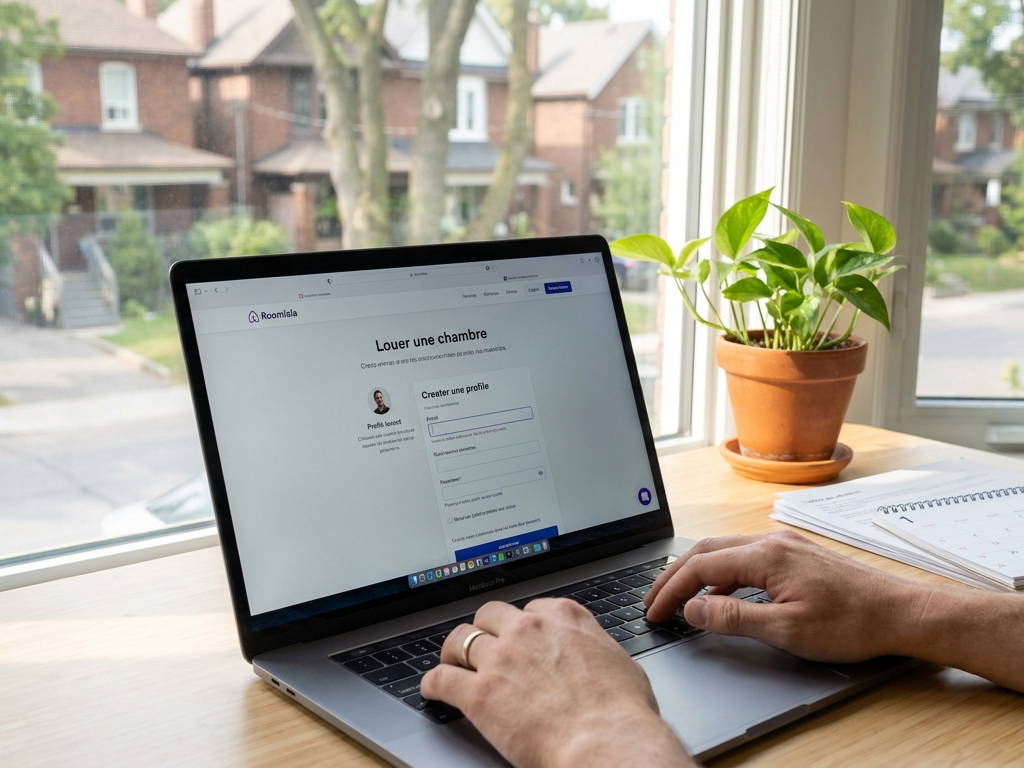
Faced with the complexity of the new laws and the risks of fines, you might feel isolated or hesitant. This is exactly where we come in. At Roomlala, our mission is to facilitate the connection between hosts with a spare room and tenants looking for medium or long-term accommodation. We have adapted our tools to help you scrupulously comply with the regulations in force in 2026.
To make your life easier, we have implemented features dedicated to rentals of more than 90 days. Here are the main advantages of our platform for homeowners:
- Qualified profiles: Our platform mainly attracts students, interns, and young professionals, who are the ideal profiles for long-term stays.
- Secure messaging: You can communicate in complete confidentiality and organise your visits, whether virtual or physical, before validating a booking.
- Guaranteed payments: Online transactions secure your first months of rent, protecting you without the risk of unpaid rent from the start of the lease.
- A trusted framework: We highlight compliant listings and help hosts find the right tenants with peace of mind.
Next, we provide you with practical advice and resources to ensure your procedures comply with the Residential Tenancy Act. Whether it is understanding rent setting, establishing clear cohabitation rules, or managing the security deposit, we guide you step by step so that your hosting experience is a total success.
Finally, using Roomlala secures not only your financial transactions but also your peace of mind. By choosing long-term room rental with us, you are opting for absolute legality, long-term profitability, and a human solution to the current housing challenges in British Columbia. Do not wait any longer to transform your available space into a safe and legal source of income.

There are no comments yet.
Add a comment
You must log in to post a comment.