
 SEARCH
 LIST YOUR PROPERTY
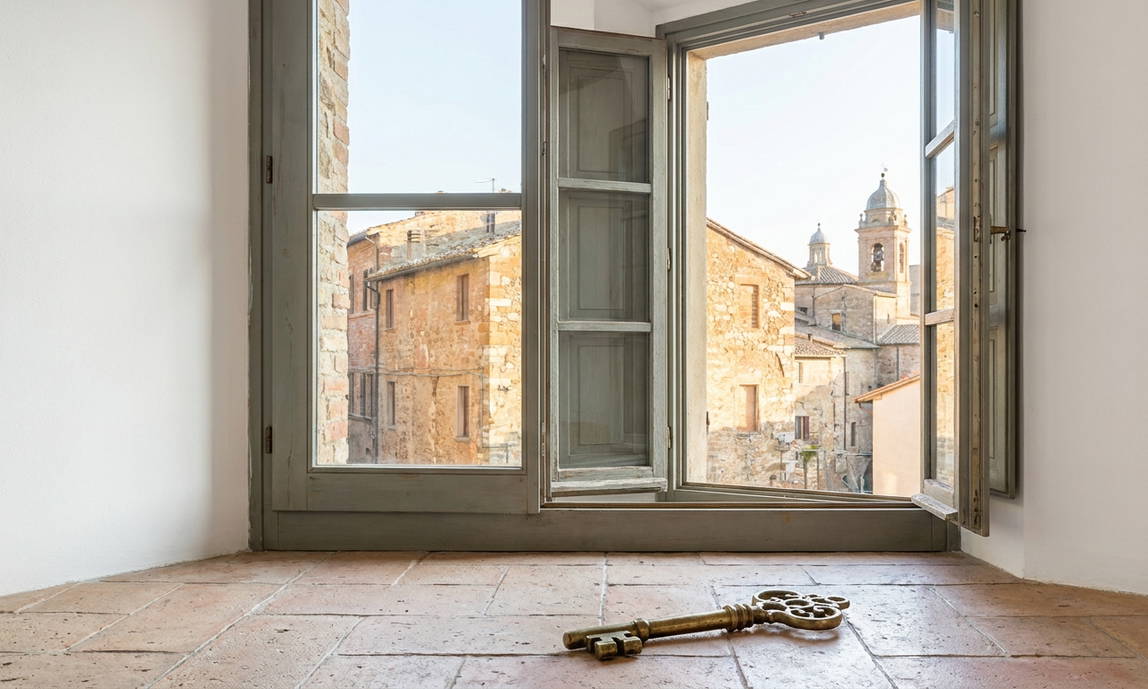
Are you a property owner in Italy or an expat with a spare room? Short-term rentals are a golden opportunity, especially in dynamic major cities. However, Italian legislation is strict and rigorously regulates this practice. In 2026, the contratto uso transitorio 2026 stands out as the ideal solution for renting with total peace of mind. At Roomlala, we know that navigating the intricacies of Italian administration can be complex. This article breaks down all the essential rules for the success of your rental project.
What is the contratto uso transitorio in 2026?
The temporary rental contract, or contratto ad uso transitorio, is a lease specifically designed to meet temporary housing needs. Unlike the standard Italian lease (the well-known 4+4), this temporary lease Italy offers flexibility that is highly valued by hosts wishing to retain control over their property in the short to medium term. It is particularly suitable for renting a room to workers in Italy or to young professionals on the move.
See also: Tax deduction for 'fuorisede' students: Reducing the cost of your room in Italy in 2026, Back to school 2026 in Italy: The benefits of the Canone Concordato for renting out your room and Transitional rental agreement in 2026: The flexible, legal alternative for renting out your room in Italy
The golden rule of this contract lies in its duration: Italian law imposes a period strictly between 1 and 18 months maximum. There is no possibility of tacit or automatic renewal. At the end of the term, the contract ends automatically, which protects the host against risks of prolonged unpaid rent or unwanted occupancy. At Roomlala, we find that this duration is perfect for hosting tenants during a trial period or for a specific assignment.
For this contract to be valid, it must include a proven temporary justification, known as esigenza transitoria. This requirement can stem from the tenant (job transfer, fixed-term contract, internship, medical treatment) or the host (need to reclaim the property for a family member, planned renovations). Without this solid justification, the contract loses its temporary nature in the eyes of the law.
Let's take a concrete example: you rent a room in Milan to a French engineer who has arrived for an 8-month project. Their fixed-term employment contract constitutes the perfect esigenza transitoria. By attaching this document to the lease, you ensure that the 8-month duration will be respected and recognized by the Agenzia delle Entrate during registration.
Essential rules for drafting this temporary lease in Italy
Written justification: the pillar of the contract
We cannot say it enough: written justification is the beating heart of the contratto uso transitorio 2026. The absence of this supporting document attached to the lease is one of the most frequent and dangerous errors for a host. The rules for room rentals in Italy are uncompromising on this specific point.
The documents accepted to prove the temporary situation are varied but must be official. This could be an offer of employment, a certificate of enrollment in a short training course, a medical certificate for treatments in a specific city, or a transfer letter from an employer. The document must imperatively cover the requested rental period.
The major point of caution concerns the penalty in case of failure. If you omit to attach this justification, the temporary duration clause is void. The consequence? Your contract is automatically reclassified as a standard residential lease of 4 years, renewable for another 4 years (4+4). You thus lose all the flexibility you were seeking.
At Roomlala, we support our hosts by systematically reminding them to request these supporting documents before the start of the tenancy. A complete and well-organized file is your best insurance against disputes. Don't hesitate to check the validity date of the documents provided by your future tenant.
Setting the rent: free or regulated?
The question of rent is often a source of confusion. In Italy, the rent amount for a temporary contract cannot always be set freely. In municipalities considered to be under high housing pressure (alta tensione abitativa), such as Rome, Milan, Florence, or Bologna, the law imposes strict regulation.
In these high-pressure zones, you must apply the canone concordato (agreed rent). This rent is calculated according to price grids defined by local territorial agreements between host and tenant associations. It takes into account the size of the room, the property's location, the energy efficiency rating, and the equipment provided (furniture, internet, etc.).
Applying a free-market rent in a zone subject to agreed rent exposes you to significant risks. The tenant could take legal action to request a rent reduction and demand the reimbursement of any overpayment since the start of the lease. It is therefore crucial to inquire at your town hall or a local host association.
Conversely, if your property is located in a small rural town or a non-pressure zone, you are free to set the rent by mutual agreement with the tenant. For example, for a room in a village in Puglia not classified as a high-pressure zone, you determine the price according to market rates. But be aware, this freedom comes with a different tax regime.
Advantageous taxation: a closer look at the cedolare secca for a room
Understanding the cedolare secca regime
Italian taxation offers a powerful tool for hosts: the cedolare secca room. This is a flat-rate substitute tax that replaces the standard income tax (IRPEF), as well as contract registration and stamp duties. It is a major advantage of the contratto uso transitorio 2026.
The rate of this tax depends on the nature of your rent. If you apply a free-market rent (in non-pressure municipalities), the cedolare secca rate is 21%. However, if you are in a high-pressure zone and you respect the agreed rent (canone concordato), the rate drops spectacularly to just 10%.
This 10% tax reduction is a strong incentive from the Italian state to encourage the availability of affordable housing. For a host, renting a room at a rent slightly below the market price but taxed at only 10% often proves much more profitable than a higher rent taxed at the progressive income tax scale.
Imagine you rent a room in Turin for 400 euros per month under an agreed rent. With the cedolare secca at 10%, you will only pay 40 euros of tax per month on this income, without any other additional tax at the time of registering the contract with the Agenzia delle Entrate. A real opportunity to optimize your returns.
Traps to avoid in 2026
2026 has brought its share of tax reforms in Italy, and it is essential not to confuse the temporary lease with short-term rentals (locazioni brevi of less than 30 days, Airbnb style). The tax regime for these ultra-short rentals has been severely tightened to combat housing shortages.
In 2026, the application of the cedolare secca for locazioni brevi is now limited to a maximum of 2 properties per year for the same host. Beyond that, the activity is considered commercial, requiring the opening of a Partita IVA (VAT number) and leading to much heavier taxation.
The temporary contract of 1 to 18 months completely escapes these punitive restrictions. It remains governed by the rules of standard residential renting. By opting for this temporary lease, you secure your tax situation without risking being reclassified as a professional host, while maintaining excellent profitability.
At Roomlala, we strongly encourage our users to prioritize these monthly rentals. Not only do you avoid the exhausting turnover of overnight rentals, but you also benefit from a stable legal framework, clear taxation, and regular income. It is the perfect compromise between security and flexibility.
Students or workers: which contract to choose to rent your room?
It is important to emphasize that there is a specific variation of the temporary contract: the contract for university students (contratto per studenti universitari). Although it shares the same philosophy of flexibility, its rules differ slightly from the classic contratto uso transitorio intended for workers.
The student lease has a legal duration of between 6 and 36 months. It is exclusively reserved for students enrolled in a university located in a municipality different from their primary residence. This contract is compulsorily subject to the agreed rent (canone concordato), which guarantees the 10% rate for the cedolare secca.
A notable advantage of this student contract lies in the tax deductions offered to the student's parents (who often pay the rent), making your room particularly attractive on the market. However, if you are targeting a young professional, an intern, or a seconded worker, it is the classic contratto uso transitorio of 1 to 18 months that must be used.
In conclusion, renting a room in Italy in 2026 offers tremendous opportunities thanks to the temporary contract, provided you master the codes. Rigorous justification, choosing the right rent, and optimization via the cedolare secca are the keys to your success. Ready to get started? Publish your listing on Roomlala today and find the ideal tenant with total simplicity and legality.





There are no comments yet.
Add a comment
You must log in to post a comment.