
 SEARCH
 LIST YOUR PROPERTY
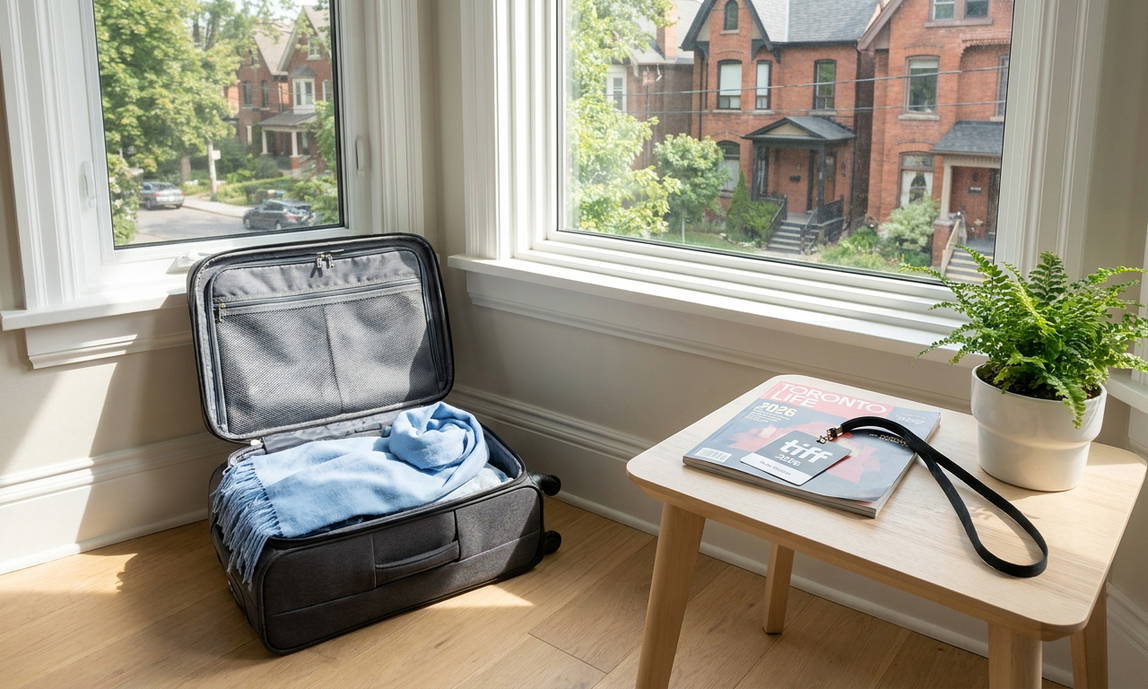
September is fast approaching, and with it, the excitement of one of the most prestigious film events in the world. From 10 to 20 September 2026, the Canadian metropolis will be buzzing to the rhythm of the 51st Toronto International Film Festival. While this event attracts thousands of cinema lovers, industry professionals, and curious visitors from all over the globe, it also poses a major challenge: finding affordable Toronto accommodation. Faced with skyrocketing traditional hotel prices, it is reasonable to wonder how to enjoy this Toronto film festival without breaking the bank. At Roomlala, we believe that accommodation should never be an obstacle to your passions. That's why we're sharing our best tip for experiencing TIFF 2026 from the inside: a homestay. It is a solution that is both budget-friendly, authentic, and perfectly aligned with local regulations.
Why does TIFF 2026 make the Toronto housing market explode?
The 51st edition of a world-renowned festival
The Toronto International Film Festival, commonly known as TIFF, is not just a film buff's gathering. It is the unofficial kick-off to the awards season and the essential meeting point for Hollywood's biggest stars, independent directors, and enthusiasts of the seventh art. For this 51st edition, which will be held from 10 to 20 September 2026, the organisers are planning an exceptional programme around the famous TIFF Bell Lightbox and surrounding downtown theatres.
See also: Athletissima Lausanne 2026: Great tips for affordable accommodation, Omega European Masters 2026: Accommodation in Crans-Montana without breaking the bank and Fête de l'Humanité 2026: The tip for low-cost accommodation near Base 217
This massive influx of visitors literally transforms the city. For ten days, Toronto's streets fill with festival-goers, restaurants are fully booked, and public transport runs at full capacity. This excitement creates unprecedented demand on the short-term accommodation market. The city's hotel infrastructure, although vast, struggles to absorb this human wave, which inevitably leads to extreme pressure on availability.
At Roomlala, we see this saturation phenomenon every year. As soon as the official dates and programme are announced, searches for accommodation explode. Festival-goers who leave it until the last minute often hit a wall: either there is no space left, or the rates have become inaccessible to the average person. It is in this context of high demand that the need to find alternatives becomes crucial for anyone wanting to join the festivities without sacrificing their savings.
The surge in hotel prices in the city centre
The law of supply and demand hits the Toronto hotel sector hard during TIFF. Our market analyses show a spectacular inflation of rates from the very first day of the festival. In the city centre, in the immediate vicinity of cinemas and screening areas, a standard hotel room that usually rents for around $350 CAD off-peak can easily reach, or even exceed, $950 CAD per night during the event.
Let's take a concrete example to understand the impact on a traveller's budget. Imagine a couple of cinema fans wanting to stay five nights in Toronto to attend a few premieres. By opting for a standard downtown hotel, their accommodation budget would amount to about $4,750 CAD, not including taxes, meals, and tickets for the screenings. An astronomical sum that discourages many enthusiasts from making the trip.
This dynamic pricing, while legal for hotels, creates a real divide. The Toronto film festival thus risks becoming an event reserved for a financial elite. This is precisely where we come in. We firmly believe that access to culture and major events must remain democratic. By offering affordable alternatives, we enable travellers to reallocate their budget where it really matters: cinema tickets, local dining, and unforgettable souvenirs.
The homestay in Toronto: the affordable and legal alternative
Understanding Toronto's short-term rental regulations
To counter the housing crisis and regulate tourism, the City of Toronto has implemented very strict legislation regarding short-term rentals, i.e., stays of less than 28 consecutive days. It is essential to understand these rules to book accommodation legally and avoid unpleasant surprises. In Toronto, it is only legal to rent out your primary residence for short-term stays. Investors who buy apartments solely to rent them out on tourist platforms are therefore acting illegally if it is not their primary address.
Furthermore, renting out an entire home (when the host is not present) is capped at a maximum of 180 nights per year. This restriction significantly limits the overall supply of entire homes available on the market, which also contributes to keeping prices high, especially during major events like TIFF 2026. Municipal authorities carry out regular checks and non-compliant listings are systematically removed.
However, the regulations provide for a major and very advantageous exception for the rental of private rooms within the primary residence. Unlike renting an entire home, the rental of one or more rooms (up to a maximum of three) is not subject to any annual night limit. This is a fundamental distinction that encourages shared space and authentic hosting, while preserving the city's residential housing stock.
Why the Roomlala model is the ideal solution for the film festival
It is precisely on this legal exception that Roomlala's expertise is based. By offering you the chance to rent a Toronto homestay, we provide you not only with a solution that is perfectly in line with local laws, but also a remarkably budget-friendly alternative. Since hosts who rent out a room are not limited by the 180-night cap, the supply is more abundant and prices remain much more stable and reasonable, even during the peak of the TIFF rush.
Practically speaking, renting a homestay via our platform allows you to divide your accommodation budget by three, or even four, compared to a hotel room. Instead of paying $950 CAD per night, you can find comfortable, welcoming, and well-located rooms for rates ranging between $80 CAD and $200 CAD per night, depending on the area and amenities. This substantial saving completely changes the game when planning your trip.
Beyond the financial aspect, choosing a homestay means opting for an enriching human experience. Your Toronto hosts are often the best guides you could find. They will be able to point you to the best shortcuts to reach the TIFF Bell Lightbox, recommend that little neighbourhood cafe unknown to tourists, or even brief you on the places where you have the best chance of spotting celebrities. It is a total immersion into local life that we are proud to facilitate.
How to properly prepare your Toronto accommodation for the film festival?
Anticipating your booking to guarantee the best rates
While a homestay is the most economical solution, it is no exception to the golden rule of major events: anticipation is the key to success. For TIFF 2026, we strongly advise you to start your search for accommodation as early as the spring of 2026. By acting several months in advance, you will have access to a much wider choice of listings on Roomlala, which will allow you to select the room that exactly matches your criteria for comfort and budget.
Anticipation also allows you to start a conversation with your future hosts. At Roomlala, we encourage exchanges prior to booking. This is an opportunity to ask your questions about the accessibility of public transport from the accommodation, arrival times, or available amenities (such as fast Wi-Fi, essential for booking your cinema tickets online). Good contact beforehand is the guarantee of a successful stay.
To illustrate the importance of acting early, imagine a festival-goer who decides to look for their Toronto homestay at the end of August, just a few days before the start of the festival. Although they will probably still find options on our platform, accommodation located in the immediate vicinity of direct subway lines to the city centre is likely to be already booked. They may then have to stay further away, which will lengthen their daily travel times.
Choosing the right neighbourhood to live the festival to the full
Toronto's geography is vast, and the choice of neighbourhood is strategic for fully enjoying the Toronto film festival. While the King West neighbourhood is the epicentre of the event (and therefore very popular and often noisy), there are excellent alternatives served by the sprawling TTC (Toronto Transit Commission) network. We particularly recommend targeting residential neighbourhoods located on Subway Lines 1 (Yonge-University) or 2 (Bloor-Danforth).
The Annex neighbourhood, for example, is a fantastic option. With its student vibe, tree-lined streets, and Victorian houses, it's a charming place to rent a room. Above all, it is just a few subway stops from the heart of the festival. A 15-minute trip will drop you right in the centre of the action, while guaranteeing peaceful nights away from the tumult of gala evenings.
Another excellent option is the Leslieville neighbourhood, located east of the city centre. Although it is not on a subway line, it is perfectly served by streetcars that operate 24/7. It is a neighbourhood renowned for its brunches, independent boutiques, and relaxed atmosphere. By staying in a homestay in Leslieville, you will enjoy an authentic Toronto lifestyle while keeping easy and direct access to the dark rooms of the city centre.
Toronto hosts: Welcome festival-goers with complete peace of mind with Roomlala
The mandatory steps to be compliant
If you live in Toronto and have an unoccupied spare room, TIFF 2026 is the perfect opportunity to generate a significant supplementary income. However, at Roomlala, we insist that our hosts operate in strict compliance with the law. The City of Toronto requires that any host offering a room for stays of less than 28 days must be registered with municipal services. This process is simple but essential.
To obtain your short-term rental licence number, you must register on the City of Toronto portal. In 2026, the annual registration fee is $375 CAD. This licence number must be displayed on your Roomlala listing. It is a guarantee of trust for festival-goers looking for safe and legal accommodation. Without this number, your listing is exposed to sanctions from the municipality, which can go up to heavy fines.
We support you in these steps by reminding you of your legal obligations when creating your listing. The advantage of renting one or more rooms (up to three) in your primary residence, as we have seen, is that you are not subject to the 180-night-per-year limit. You can therefore welcome travellers throughout the year, thus largely recouping the initial registration fees, and particularly during the very lucrative period of the festival.
Managing the Municipal Accommodation Tax (MAT)
Another crucial point of vigilance for Toronto hosts concerns the visitor tax, known as the Municipal Accommodation Tax (MAT). As a short-term host, you have a legal obligation to collect this tax from your guests and remit it to the City of Toronto. This contribution helps the municipality fund tourism development and local infrastructure.
It is essential to stay informed of the rate in effect at the time of invoicing your stays for TIFF 2026. For information, the city had temporarily raised this rate to 8.5% until 31 July 2026. Before welcoming your guests in September, we advise you to check the official City of Toronto website to see if this 8.5% rate has been maintained or if it has been revised. Inaccurate collection could lead to unnecessary financial penalties.
At Roomlala, we do everything possible to make life easier for our users. Our secure platform allows you to manage your bookings, communicate with festival-goers, and receive your payments with complete peace of mind. By respecting these few tax and administrative rules, you will transform your unoccupied room into a real economic opportunity, while actively participating in Toronto's legendary hospitality during the biggest cultural event of the year.









There are no comments yet.
Add a comment
You must log in to post a comment.