
 SEARCH
 LIST YOUR PROPERTY
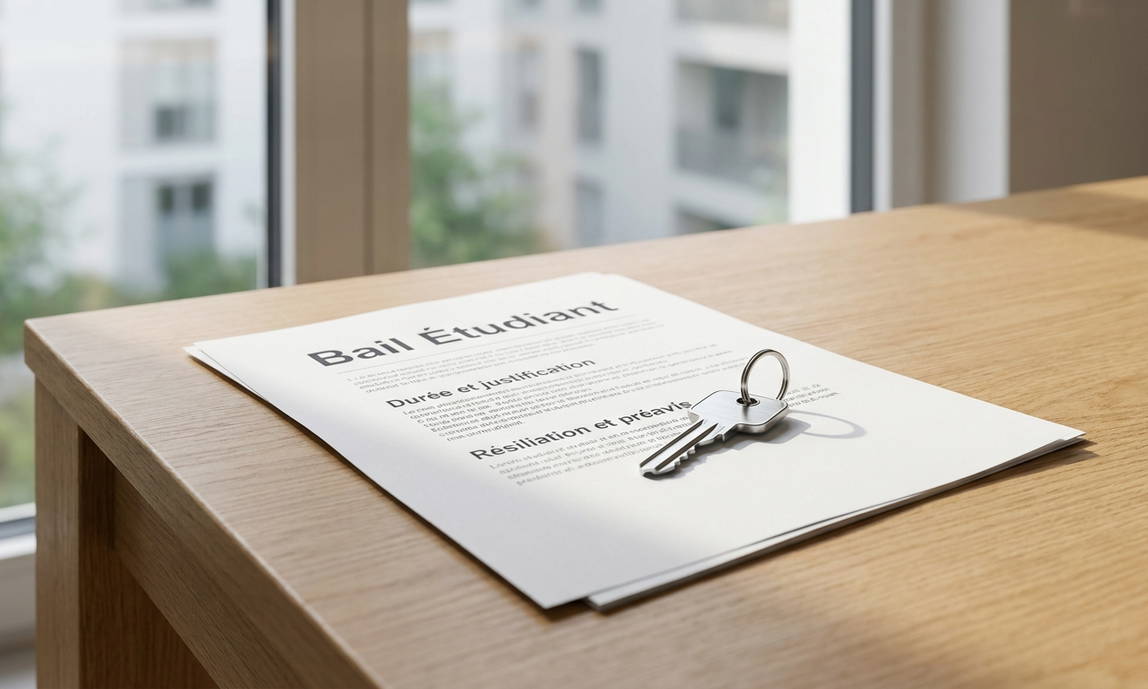
As the start of the academic year is in full swing, there is a buzz of excitement both from students looking for their future home and from hosts preparing their properties. At Roomlala, we know how stressful this time can be. Renting a student room in Belgium, particularly in Wallonia, means navigating a specific and sometimes complex legal framework. There are many questions: what is the legal duration? How do you manage an early departure? What are the limits of the rental security deposit?
To answer these legitimate questions, it is essential to look at the current Wallonia student housing legislation. The 2026 Wallonia student lease was designed to balance the rights and duties of all parties, offering the flexibility necessary for academic life while protecting landlords' investments. Whether you are a host keen to follow the law to the letter or a student wanting to know their rights before signing, this guide is for you.
See also: Student accommodation in Flanders: Everything you need to know about the student lease for the 2026 academic year, Student lease regulations in Brussels: New legal requirements to know for the 2026 academic year and 2026 student intake in Brussels: Everything you need to know about student leases and shared housing
In this comprehensive article, we will detail the essential rules of a student rental contract together. From the lease duration to strict termination conditions, including the subtleties of subletting and the crucial importance of registration, we will guide you step by step. Our goal at Roomlala is to provide you with all the keys to approach this academic year with complete peace of mind and maximum legal security.
The foundations of the 2026 Wallonia student lease: Duration and justification
The legal duration and automatic end of the contract
The first fundamental element to understand regarding student leases in Wallonia is the timeframe. Unlike a standard primary residence lease, this contract is specifically calibrated to match the rhythm of the academic year. The law states that this type of lease is concluded for a maximum duration of one year. In practice, we find that the vast majority of hosts offer 10 or 12-month contracts, aligning perfectly with the academic calendar, from September to June or September to August.
One of the major advantages of this legislation for both parties lies in the automatic end of the contract. Indeed, at the agreed expiry date, the lease ends automatically by operation of law. This means that neither party needs to provide notice of departure or non-renewal. This provision avoids unpleasant surprises and administrative oversights that could lead to an unwanted tacit renewal, greatly simplifying end-of-year management.
Let's take a concrete example to illustrate this. Imagine Julien, a student in Namur, signs a student lease starting on 1 September 2026 for a duration of 10 months. His contract will automatically end on 30 June 2027. Neither Julien nor his host will have to send a registered letter to acknowledge the end of this rental. Julien will thus be able to focus on his year-end exams, and the host can calmly plan for the arrival of the next tenant for the following academic year.
The crucial importance of proof of enrollment
If duration is a pillar of the contract, proof of the occupant's status is its cornerstone. For a rental contract to be legally classified as a student lease in Wallonia, the tenant must essentially prove that they are regularly enrolled in an educational institution. This requirement ensures that the derogatory and flexible regime of the student lease is not used for ulterior purposes by non-student tenants.
The law does, however, grant some flexibility regarding when this proof must be provided. The student has a maximum period of 6 months after moving in to submit their school enrollment certificate to the host. This flexibility is particularly useful at the start of the year, when university or college administrations are overwhelmed and official documents may take time to be issued.
However, this is a point requiring absolute vigilance. If the student does not provide this proof within the 6-month deadline, the consequences are significant. The contract instantly loses its qualification as a student lease and automatically falls under the rules of a primary residence lease. For the host, this means being subject to much more restrictive termination rules (3 or 9-year leases). At Roomlala, we strongly advise hosts to include a friendly reminder to their tenants from October onwards to collect this valuable document.
Termination and notice: How to end a student rental contract?
The rules for early departure for the tenant
A student's life is far from straightforward. A change in direction, financial difficulties, or personal issues can arise during the year. The Wallonia student housing legislation has provided for these possibilities by strictly regulating the conditions for early termination. In principle, the tenant has the right to end their lease before the expiry date, but they must respect a precise calendar and financial conditions to protect the host from sudden rental vacancy.
The pivotal date to remember is 15 March. If the student wishes to leave their accommodation before this date, they are entitled to terminate their contract by giving 2 months' notice. Furthermore, they must pay a termination indemnity equivalent to 3 months' rent. This indemnity aims to compensate the host, who will very likely find it difficult to find a replacement student tenant in the middle of the academic year.
Let's illustrate this with a case study. Sophie has been renting a room in Liège since September. In December, she realises that her studies are not for her and decides to move back in with her parents. She gives her notice on 1 January. Her notice period will run until 28 February (2 months). In addition to paying her rent for January and February, she will have to pay her host an indemnity corresponding to 3 months' rent. After 15 March, however, early termination is no longer legally possible, except by mutual agreement between both parties.
The exceptions: When is the indemnity not due?
Although the general rule imposes a 3-month rent indemnity for early departure, the 2026 Walloon law shows humanity and pragmatism by providing exceptions. In certain exceptional and duly justified situations, the student may be exempt from paying this financial penalty, although they must still respect the 2-month notice period. These exceptions protect students in the face of life's accidents or major academic setbacks.
Here are the specific cases where the indemnity is not claimed:
- Abandonment or refusal of enrollment: If the student decides to stop their studies or if their enrollment is officially refused by the institution.
- The death of a parent: A tragic situation that often upsets the student's financial capacity or organisation.
- Assignment of lease: If the student finds a replacement tenant (another student) who takes over the lease under the same conditions, with the host's agreement.
Let's take the example of an assignment of lease, a very common practice that we encourage at Roomlala to satisfy everyone. If Maxime has to leave his student room in Mons in February, but introduces his host to a friend, Lucas, who is ready to take over the room immediately after his notice period, the host suffers no financial loss. In this case, Maxime will not have to pay the 3-month indemnity. It is a win-win solution that simply requires good communication.
Security deposit and subletting: What the Wallonia student housing legislation says
The strict cap on the security deposit
The security deposit, often called a bond, is a central element of the student rental contract. It serves as a safety net for the host in the event of rental damage or unpaid rent. However, to avoid abuses and not further strain the budgets of young people, the Walloon law strictly regulates the amount of this deposit. In 2026, the rule is clear and non-negotiable.
The security deposit is strictly capped at a maximum of two months' rent (excluding charges). This cap applies universally, regardless of the form this deposit takes. A host cannot, under any circumstances, demand three months of deposit under the pretext that the accommodation is furnished or that it is high-end shared housing. This limitation aims to facilitate access to housing for all students.
Furthermore, the student has a choice regarding the form of their deposit. It can be a blocked account in their name at a financial institution, a standard bank guarantee, or a guarantee provided by the CPAS (Public Centre for Social Welfare). For example, for a room rented at 450 euros per month, the host can never demand more than 900 euros as a deposit. At Roomlala, we ensure that the amounts requested on our platform strictly respect these legal caps.
Subletting: An opportunity under conditions
With the development of exchange programmes like Erasmus, international mobility is an integral part of the student journey. It is very common for a student to have to be away for a few months to study abroad or complete an internship. To avoid paying rent for nothing, subletting is the ideal solution. The good news is that the Walloon student lease legally permits this practice.
However, subletting is not an absolute and unilateral right. It is subject to a condition sine qua non: the prior written agreement of the host. The main student tenant cannot sublet their room in secret. They must present their plan to the host, often by proposing the profile of the subtenant. The main tenant remains the sole person responsible towards the host in the event of damage or non-payment by the subtenant.
Imagine Clara, a student in Louvain-la-Neuve, who is going on Erasmus to Madrid from January to June. She wants to sublet her room to a Spanish student coming to do the reverse journey. She must send a formal request to her host. If the latter agrees (and they have every interest in doing so to keep a good relationship with Clara), a subletting contract will be drawn up. At Roomlala, we facilitate these steps by offering secure frameworks for connecting, ensuring that the subtenant is reliable and verified.
Lease registration and the security offered by Roomlala
The mandatory registration by the host
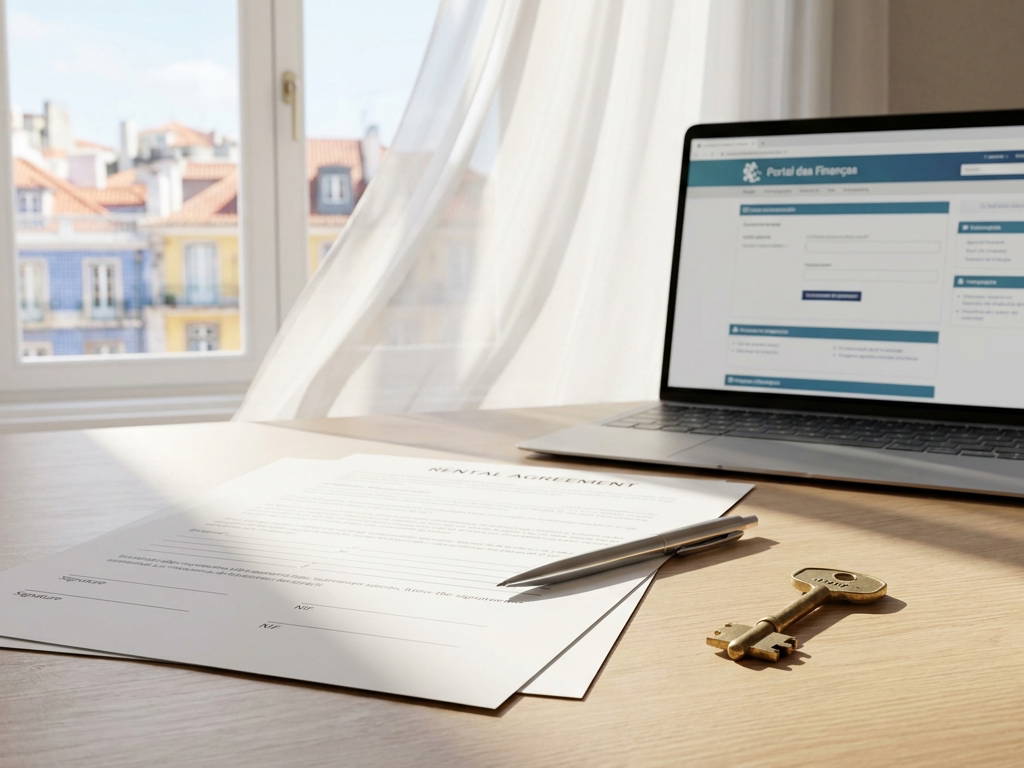
The administrative aspect of renting is sometimes perceived as a chore, but it is of paramount importance. In Wallonia, the registration of a student lease is a strict legal obligation that falls exclusively on the host. This procedure, which must be carried out with the SPF Finance registration office (often via the MyMinfin platform), is completely free. It gives a certain date to the contract and makes it enforceable against third parties.
The deadline to register the lease is two months from its signing. But be warned, the consequences of a failure to register are particularly severe for the landlord. If the host neglects this formality, the legislation severely punishes this omission to protect the tenant. This is a major point of vigilance that we constantly remind our community of hosts about.
Indeed, if the lease is not registered within the deadlines, the student acquires the right to leave the accommodation at any time, without having to respect any notice period and without having to pay the 3-month rent indemnity, even if they leave before 15 March. A simple administrative oversight can therefore ruin the host's financial security for the entire academic year. It is therefore imperative to complete this task as soon as the documents are signed.
Why choose Roomlala to rent a student room in Belgium?
Faced with the density and complexity of the Wallonia student housing legislation, it is normal to sometimes feel overwhelmed. Whether you are a host fearing making a legal mistake or a student fearing abuse, guidance is essential. This is precisely where Roomlala steps in. We are not just a simple classifieds site; we are a true trusted third party that secures the entire rental process.
By using Roomlala, you have the assurance of using a reliable rental framework. We provide our users with student rental contract templates that comply with the latest requirements of the 2026 Walloon law. Our online booking processes ensure the traceability of exchanges and the security of initial payments, thus avoiding the scams so frequent during the back-to-school periods.
In addition, our team of experts is here to support you. We verify profiles to reassure hosts and we inform tenants of their rights. By choosing Roomlala, you transform a potentially anxiety-inducing administrative process into an enriching human experience. Renting a room in a homestay or an independent student room becomes simple, legal, and perfectly secure. Prepare for the start of your year with a light heart; we will take care of the rest!


There are no comments yet.
Add a comment
You must log in to post a comment.